
I had a lot of big projects this year that I’m really proud of! In January, I made waterproof jackets for Ryan and myself. The project was daunting because the pattern is mainly self-drafted. In February, I made myself a jumpsuit, something I swore I would never do. In March, I started testing daypack patterns. In April, I made a bunch of different shorts, the Pomona shorts being my favorite. I finished day packs for Ryan, my mom, and me in May. Our day packs have been the highlight project of the year. I love my bag and have worn it for hundreds of miles hiking. My sewing always slows down in the summer, but I had fun putting together the hip-measuring tutorial, especially when I found the method of using a poster board. Unfortunately, from August through October, I had to put sewing and crafting on pause to deal with the passing of several family members and our unexpected move. By November, things were slowly returning to normal, and I was able to update my t-shirt pattern. I was hoping to finish my down jacket project in December, and although I only have a zipper left to install, it’ll have to wait until January.
Let’s dive into my 2023 wrap!
Totals
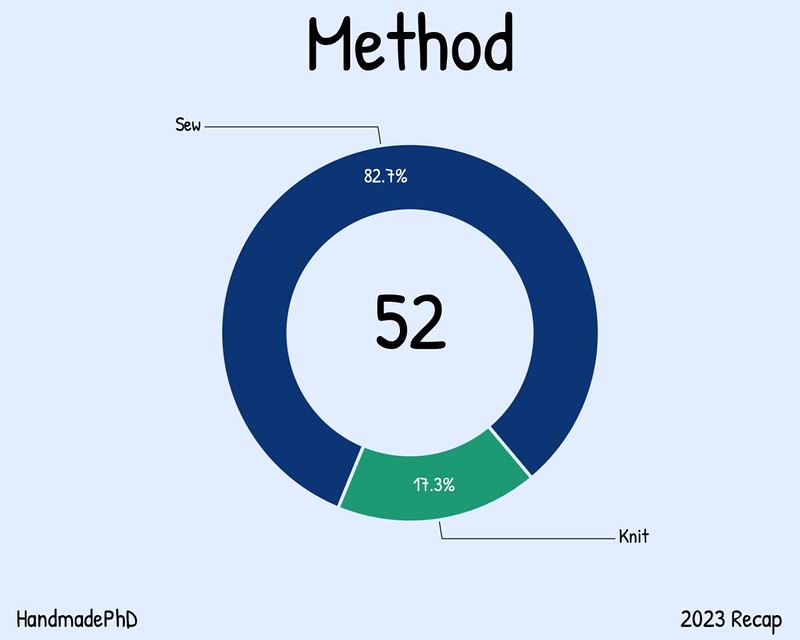
I completed a total of 52 sewing and/or knitting projects this year. My monthly average was 4.33 projects.

I spent $3,316.22 with a monthly average of $276.35. This includes everything from fabric, yarn, new equipment, muslin fabric, needles, rulers, machine repairs, etc.

I spent almost 360 hours (about 15 days) crafting. My monthly average was a few minutes shy of 30 hours. This time includes taping together PDFs, cutting fabric, knitting, testing fit, sewing the garments, setting up my machines, etc.

Stash Usage
A friend recently wrote a great article about the infamous fabric stash. Unfortunately, social media pushes everyone to consumerism by enticing you with the latest trends, sales, new looks, exclusive products, etc. I muted all IG stories in January and unfollowed nearly all companies. I don’t spend time looking at Reels since I find most trending audio clips distasteful. It’s been beneficial to step away from “content creators” and focus more on building friendships with “makers” (I love this phrasing from Rebecca’s blog post). It’s scary how many tactics from MLMs are used in the crafting world. I read “Hey Hun” this autumn and just cringed at the similarities.
A big part of tracking my work is to track my fabric and yarn usage. I only buy fabric when I have a specific project in mind. I will test the pattern with muslin fabric first. Order fabric samples if I’m unsure what fabric I want for my project. Finally, I order fabric only after I’ve got the fit how I want.
The other benefit of keeping track of my fabric is that I’m a big fan of repeating patterns. When I repeat a pattern, I know exactly how much fabric I need.

This year has been an interesting one for yarn usage. I bought a ton of yarn in December 2022, so it isn’t on this graph, and I made several cardigans at the beginning of 2023. The only yarn I purchased this year was sock yarn from KnitPicks, and I’ve used most of that yarn knitting socks all summer. I’m currently knitting Ryan a sweater, but the yarn is from an old sweater that no longer fits. I didn’t need to buy more yarn! We unraveled two of his sweaters this summer, so I have lots of yarn to reuse.

Finally, how long does my yarn or fabric sit in my stash before I use it? Given my process of testing patterns first and ordering just the supplies I need when I’m satisfied with my fit, it is no wonder I will utilize my stash at 53.8% within the first week! Sometimes, I’m busy, so it’ll take a few weeks or maybe a month or two to start my project. If I buy fabric, I will use it 90% of the time within 3 months of purchasing it! Occasionally, I’ll buy more fabric than I need, like cotton jersey from PicoTextiles, because I know I’ll eventually need to make more t-shirts. But it is a rare occasion that I buy fabric for no other reason than to buy fabric.

Cost and Time Breakdown
Let’s unpack my expenditures and time a bit more. As you can see, of the $3,316.22, I spent $1626 on fabric (about 50%).
Notions include everything not fabric: buttons, zippers, snaps, buckles, down, fold over elastic, velcro, etc.
Mockup fabric is mostly muslin bolts, though I did buy cheaper ripstop fabric for my packs earlier this year to test the fit and pattern before purchasing the expensive ripstop fabric.
Equipment includes stuff like needles, pins, repairs, etc.
I was surprised I spent as much as I did on patterns, $282. Honestly, I don’t feel like I buy that many patterns.
As I mentioned above, I love buying samples! I especially like having color cards for things like YKK zippers, Gutermann Mara 400-Color Thread Chart, Chino Twill, and other fabrics I consistently purchase.
Finally, yarn. Yarn is expensive, so I’m thankful I only purchased sock yarn this summer. To make a sweater, it costs $100 to $200.

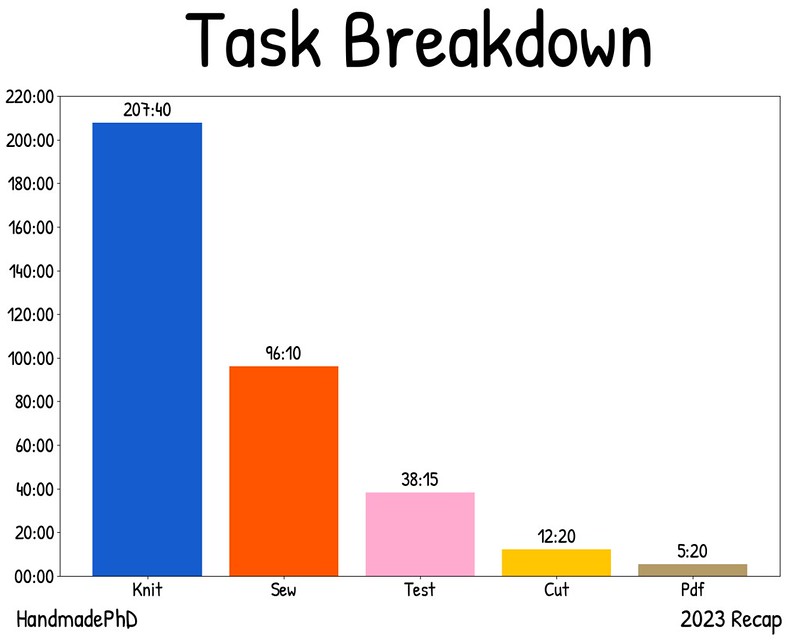
My task breakdown is as follows: 207 hours of knitting, 96 hours of sewing, 38 hours of testing, 12 hours of cutting fabric, and 5 hours and 20 minutes of taping together PDFs.
The sewing hours include the minutes it takes to clean my sewing room, set up my machines, etc. I put a new needle into my machines at the beginning of every project and remove the dust off of everything at the end. And at the end of the day, I make sure my sewing room is always tidied up, even if I’m still in the middle of a project.
The testing hours include cutting muslin, redrawing pattern pieces after edits, sewing the test garment, and standing in front of a mirror to assess fit. Testing always feels like it takes forever and is extremely exhausting, but the more I sew, the easier it gets.
Cutting fabric is only the final fabric for the garment and not all the muslin cutting during testing.
I giggled at how few hours I spent taping together PDF patterns this year. I bought myself a light board over a year ago, and it makes taping together PDFs easy. I don’t trim edges or do anything fancy. The light board lets me line up the pattern, and then I use clear tape to hold the pieces together. Easy-peasy.
Finally, I calculated the number of hours across days from when I started taping together my PDFs or testing a pattern to when I finished my project. I grouped projects according to their category. For trousers, it takes me, on average, 5 hours across 8 days to work on a pattern. The slipover, socks, and sweater were all knitting projects. Knitting a slipover or sweater took me 32-33 hours across 36-37 days. Socks took me 19-1/2 hours across 28 days to knit.

Project Breakdown
I would rather make something than buy it if I can. It’s been years since I purchased anything besides my hiking Injinji socks. I’m not particular: new linen bedding, silk pillowcases, small zippered pouches, new winter hat, basic tote, rain jacket, summer shorts, sports bras, underwear, knitted sweater.

Although I spend significantly more time knitting, most of my projects are sewing-related (82.7%).
I’m also pretty balanced with who I’m sewing for. I haven’t had to sew much for Ryan lately because he has been able to wear his work wardrobe for years! He’s still wearing all the McCall 6044 shirts I made him in 2017 and 2018. Talk about quality! He wore Hugh and Crye before I knew how to sew, and those shirts would last maybe a year before falling apart. My shirts have lasted over 5 years and still look brand new! My body has changed a lot in the last year, so I’ve had to focus more on myself with my projects.

I’m also not particular if I’m working with knit or woven fabrics. I know some people have a preference, but I definitely do not.

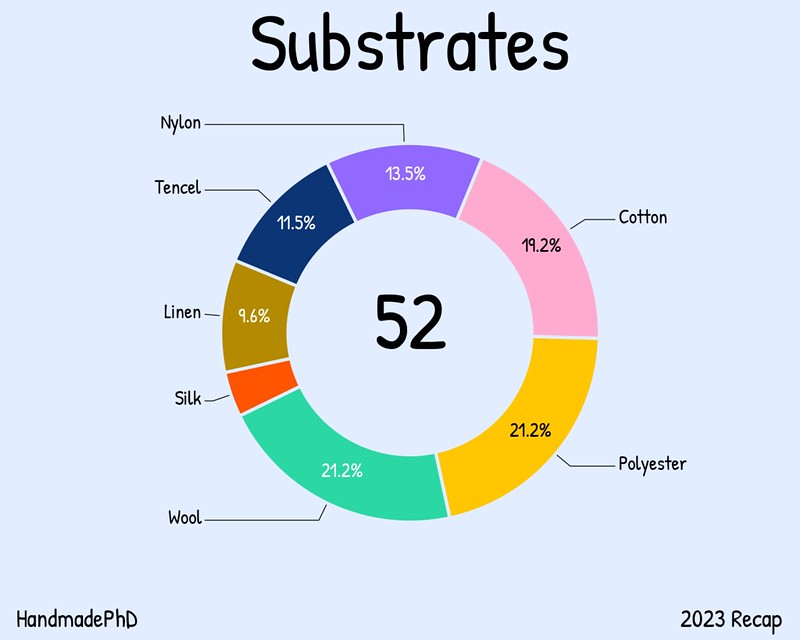
Because I don’t limit my projects, I don’t limit myself to a particular substrate. My only preference is to wear natural fibers (i.e., cotton, linen, wool) as much as possible and leave gross fabrics like polyester for gear (i.e., day packs). This was the first year I tried Tencel fabric, and I was pleasantly surprised. I will definitely be using more Tencel fabric in the future.
When it comes to shopping, I do all my shopping online. This is also another benefit to buying samples. It gives me a chance to feel the fabric before purchasing. I do have my preferred stores. KnitPicks for sock yarn. Knitting for Olive for sweater yarn. Ripstop by the Roll for technical gear fabric. Picotextiles for cotton jersey. Textiliapro for extra wide linen for bedding and YT fabric for silk. Bra builders for everything lingerie. Meter Meter for Tencel fabric. The Fabric Store for merino wool and linen. Blackbird Fabrics for upcycled denim. Honorable mentions go to Sell Fabric for chino twill and other awesome bottom-weight fabrics.

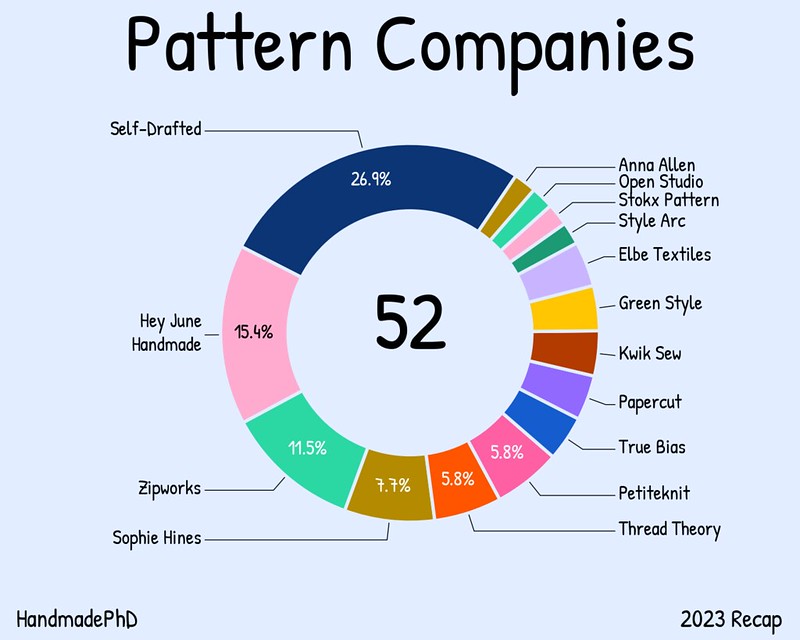
I’m also getting better at not just self-drafting all my patterns. I realize that self-drafted patterns don’t always help others recreate what I make. The few self-drafted patterns I did make this year are flat bed sheets, pillowcases, totes, etc. When possible, I publish these basic patterns on my blog or over on Gumroad (i.e., our rain jackets this year). Some new to me pattern companies this year are Anna Allen, Open Studio, Stokx, Style Arc, Green Style, and Papercut. I hope to continue pushing myself to try new things in 2024 and test more pattern companies.
Finally, colors! I’m totally a firm follower of the seasonal color palette. I look best in True Autumn colors and Ryan in Soft Summer. When I first started sewing, I would obsess over bold, bright prints and colors that looked awful on both of us. The result was a wardrobe that clashed, and I didn’t like how anything looked on me. From 2018 to 2019, I started focusing on adding solid neutrals to our wardrobe and many garments we still wear today since they match everything. In the last 1 to 2 years, I’ve started adding color to my makes, focusing on the seasonal colors that look best for each of us. Ryan gravitates towards blues, greens, and pinks. I prefer yellows, oranges, and purples. When I reached the end of 2023, I realized my favorite color, yellow, was hardly used. I’m now determined to add lots of yellow to my wardrobe! I made a long-sleeve t-shirt in November, a turtleneck in December, and my down jacket that is in progress are all yellow! 2024 will be the year of yellow and orange! Ryan and I both look great in reds, but it’s such a pain to wash. I always worry about red bleeding on other stuff, so I tend to avoid it when buying fabric.

Non-craft Recap
I read 76 books. I can’t believe it took me until 2022 to go to the library and get my card so I can listen to audiobooks for free. This year has been great for listening to audiobooks. I have too many to list as my favorites. I rated 32 books five stars because they were all excellent.

I also hiked/walked 705 miles. My goal was 800, but life got in the way. Also, I finally downloaded the Merlin app in November, so expect to have a 2024 wrap of birds I identified!! I’m super excited. I’ve already identified 3 birds that I didn’t even know were in Utah: greater yellowlegs, loggerhead shrike, and Townsend’s solitaire.
New Things for 2024
YouTube
I spent the summer on Instagram, posting 3D avatars of various patterns. I’m slowly reuploading videos on YouTube since that’s a more permanent location. IG is great, but it’s all about the here and now. You can’t easily search for things on IG. YouTube is much more permanent and useful. Please subscribe to my YouTube channel so you don’t miss any of my digital pattern testing.
Pattern Waste
Next year, I will improve how I keep track of my fabric. Not only will I keep track of how much fabric I buy, but I will also weigh my fabric to measure how much waste I generate. For example, I buy merino jersey fabric to make turtlenecks, and the 2 meters of fabric weigh 550 g. When I cut out my fabric, the pattern pieces weigh 290 g, and the scraps weigh 260 g. That means the pattern utilized 52.7% (290/550*100) and wasted 47.2% (260/550*100). I think this will be super insightful as to how much waste is actually generated in sewing.
Conclusion
This year has definitely been a challenging one for me personally. I’m so thankful for being able to find things like reading, hiking, and making that bring me joy. Several times this year, I just got so overwhelmed with stuff happening in my life and on social media that I thought about walking away from this blog, social media, everything. I know I floundered about trying to move away from IG to Tumblr and the Maker app. I even tried Reddit. None of it felt right. Creating boundaries on social media has dramatically helped, like not watching any Reels or Stories. I don’t post anything to Stories anymore. Instead, I post things to my IG Broadcast channels to make my content more inclusive. It took time, but the boundaries have helped.
Whether I was having a bad day personally or social media was bringing me down, the comments, emails, likes, and random acts of kindness from friends and strangers meant the world to me. In 2023, I didn’t have the energy to spend much time connecting with people, so hopefully, in 2024, I can make a concerted effort to comment and chat more.
If you have any comments or suggestions, please email me or comment below! I would love to connect. Thanks, and happy new year!
IF YOU FOUND THIS POST HELPFUL, CONSIDER SUPPORTING MY WORK BY SIGNING UP FOR A PAID SUBSCRIPTION.
POSTS OLDER THAN 3 MONTHS ARE NOW FOR SUBSCRIBERS ONLY — YOUR SUPPORT KEEPS THIS SPACE GOING.
INTERESTED IN SUBSCRIBING TO RECEIVE NEW POSTS IN YOUR INBOX?

I’m a bit late catching up with blog posts, but happy new year! I really appreciate all the analysis you share here, especially regarding pattern fitting and making technical clothing/gear. Wishing you and Ryan a peaceful 2024!
Thank you! I love the idea of having a peaceful year.
Happy New Year! I have enjoyed your blog all this year! I think your blog is the perfect mix between creative and academic thinking!
Well said! Wishing you a happy New Year 🎉
Happy New Year to you and family. I live in Brisbane Australia..over 65 and retired from being a professional dressmaker. Now I restore vintage clothing for a friend in a retro band and sew for myself and 3 sisters. Love getting your breakdown of your sewing /knitting each time it arrives. Regards Maria
Sent from my iPad
>
Thanks for saying hi! I hope you had a wonderful new years.
Thanks so much for sharing. How do you time your craft hours? App on your phone or something else?
I often forget to turn my stopwatch on and off on my phone, so I have several stopwatches around my house: one at my cutting table, one near my sewing machines, and one at the rocking chair I knit at. I start and stop the countertop stopwatch with each activity and make sure to enter the information on my Google Sheet daily. I’ve uploaded my datasheet on GitHub and Python code for generating the figures (https://github.com/HandmadePhD/2023-RECAP/blob/main/recap-datasheet-v1.xlsx). If you click “View Raw,” it’ll download the XLSX file locally.
I’ll be starting a new repository in 2024 with some changes to my datasheet.
Regarding pattern waste:
If you use those merino wool scraps to make dryer balls or stuff animal beds for shelters, are they really waste?
I loved “Watership Down” and “White Trash”. I would recommend “Atomic Habits”. I did a lot of recreational (aka non-fiction) reading this past year, mostly police procedurals or thrillers and regency romances so if you enjoy those, I enjoyed “The Benevolent Society of Ill-Mannered Ladies”, “The Eden Test”, and “Chain Gang All-Stars.”
Awesome! Thanks for the book recommendations. Watership Down made the best road trip book this summer.
Regarding the waste calculation, it pertains to the zero-waste pattern movement. The idea behind it is to understand how inefficient traditional patterns can be. Although I always try to minimize scraps and ignore the recommended fabric layout, I’m interested in seeing how much fabric I waste even with my attempts. Of course, there are many ways to use scrap fabric, as you suggested, so it doesn’t actually go to waste. Zero-waste patterns address the inefficiency of traditional patterns but often lack specific data. My goal is to raise awareness about this topic.
I love this recap! I’m inspired to make my own sheets! I’m also wondering if you’re on Goodreads.
I am on Goodreads. You can find the link in my Linktree or look me up by my username, handmadephd. I use it mainly to keep track of books I want to read and have read, but I would love to connect if you have an account.