
Joggers have been a staple in my wardrobe for years, and luckily, when I last made a pair, I added enough ease to the pattern that they’ve fit me through all my weight fluctuations. In fact, my current two pairs have lasted an impressive six years! But after all that wear, they’re definitely showing their age, and it’s time for an upgrade. I’ve used the Brassie Jogger pattern from GreenStyle to make my Gridstop fleece pants for winter hiking. I’ve loved the fit of those outdoor fleece joggers, so it only made sense to use the same pattern for my at-home joggers.
Style and Fit
I’ve 3D rendered the Brassie Joggers several times over the years, and I truly believe they don’t get the attention they deserve—especially compared to the ill-fitting Hudson Joggers. If you’re considering purchasing a jogger pattern, the Brassie Joggers are a far better choice. Check out the videos above to see the fit for yourself!
Sizing and Version
Fortunately, I already had a good idea of what size I wanted to use. My outdoor fleece joggers are a size I, which I intentionally sized up to accommodate the stiffer, less stretchy fabric. Since my at-home joggers would be made from a stretchier material, I knew I could size down by one or two sizes for a better fit.
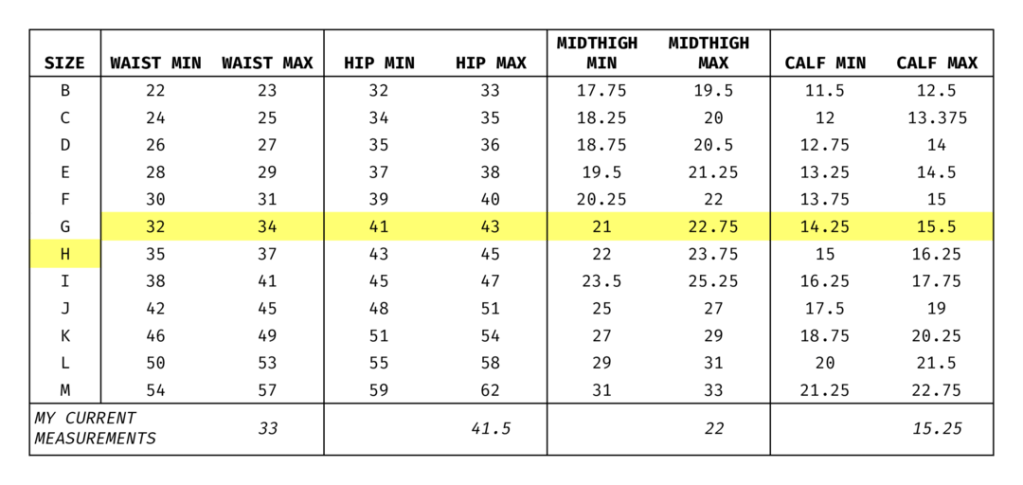
The Brassie Jogger pattern offers 12 sizes, accommodating waists from 22 to 57 inches and hips from 32 to 62 inches. Based on my current measurements—33-inch waist, 41.5-inch lower torso/hip, 22-inch mid-thigh, and 15.25-inch calf—I fall into a size G. However, I prefer a slightly looser fit, so I opted to size up one size. I made size H. For this pair, I went with the high-rise waist option and the longest inseam.
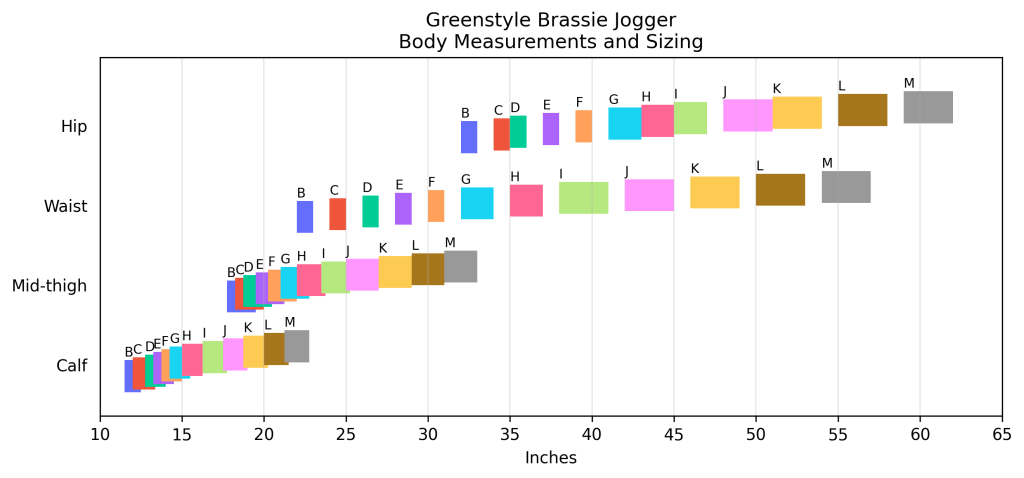
I went into a pretty detailed deep dive about sizing and body measurements the first time I blogged about this pattern. I figured I could at least update the figures and provide a little more context this time around. Above is the distribution of body measurements for the calf, mid-thigh, waist, and hip with corresponding sizes listed above each block.

Starting at the calf, I’ve plotted the recommended body measurements (bars) against the final garment measurement at the widest part of the calf (dot). I also calculated the amount of stretch in the garment based on the suggested 25% four-way stretch (X). This comparison helps visualize how much ease and stretch the pattern has at this point in the leg. Another way to interpret this graph is that all the joggers have negative ease at the calves, meaning the fabric must stretch to achieve the intended fit.
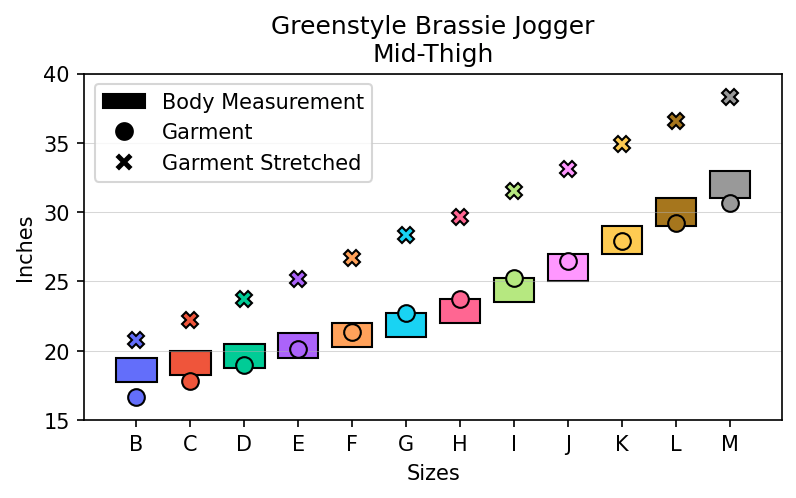
Moving up the leg, the next measurement is the mid-thigh. Sizes B, C, and M have negative ease in this area. In other words, the final garment measurement is slightly smaller than the recommended body measurement. In contrast, sizes D through L have nearly zero ease, meaning the garment’s circumference matches the recommended body measurement almost exactly. Any room in this area comes from the fabric’s stretch.
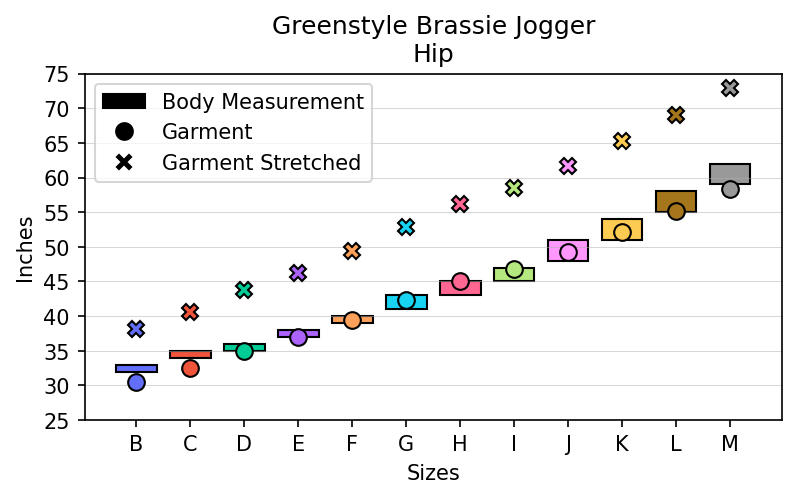
Next is the hip measurement, which is taken at the bottom of the crotch curve along the crotch line. Similar to the mid-thigh, sizes B, C, and M have slight negative ease, while the remaining sizes have nearly zero ease. This is an important factor when considering fit. Since I preferred a bit more room in my joggers, I chose to size up. However, if you prefer a snugger fit, selecting the size that matches your lower torso circumference would be the best option.
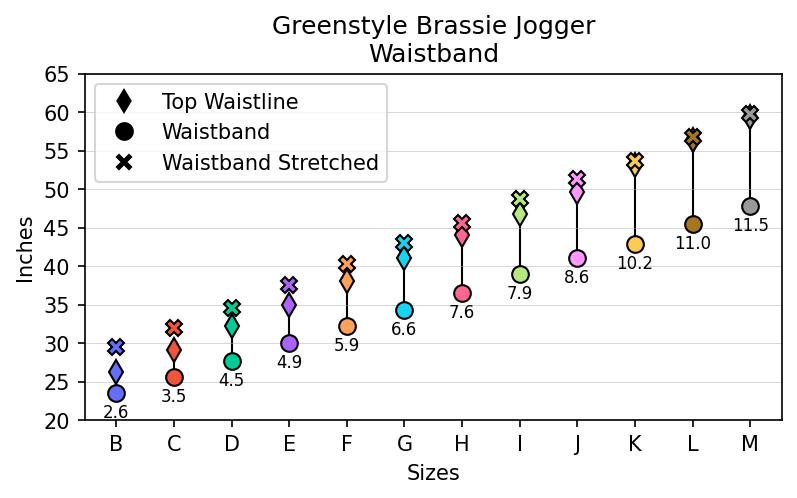
The waistband is arguably the most complex part to understand. In my original post, I compared the waistband circumference (dot) to the top of the waistline (diamond). As the sizes increase from B to M, the difference between these two measurements grows significantly. This difference indicates how much the waistband needs to be stretched to match the waistline of the pants when sewing the two pieces together.
For example, in size B, the waistband must stretch by 2.6 inches to fit the waistline, whereas in size M, it requires a much greater stretch—11.5 inches. This variation made me wonder whether the waistband could actually stretch that much!
To test this, I calculated the waistband circumference when stretched up to the recommended 25% (X). The graph shows that, theoretically, the waistband should be able to stretch (X) enough to match the top of the waistline (diamond). However, I wasn’t a fan of this design feature since it makes attaching the waistband difficult. I modified my pattern so that my waistband circumference matched the top of my waistline—something I’ll detail in the alterations section below.

Now when I add the waist body measurement, you can see the stretched waistband / top waistline provides plenty of room to fit. The final question is if the stretched waistband will fit over the recommended hip body measurements. I should note that when I’m talking about the waistband being stretched, this doesn’t include the elastic added to the waistband. I’m considering the encasing alone at this point.
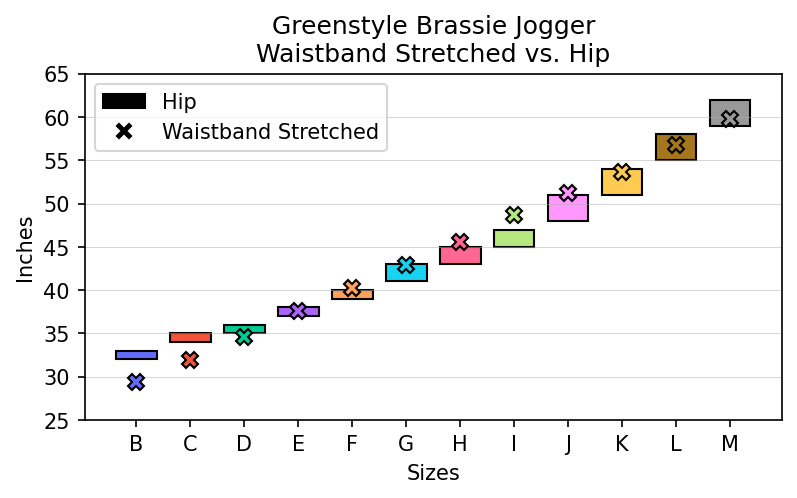
The final plot compares the waistband fabric stretched up to 25% against the recommended hip measurements. When wearing elastic-waist pants without a fly opening, the key concern is whether the waistband can stretch enough to fit over the widest part of your lower torso.
This plot suggests that the answer varies by size. Sizes B, C, and D may find the waistband too tight to comfortably pull over their body. Sizes E, F, G, K, L, and M may be able to manage, though it could be a close fit. Sizes H through J should have no issues.
However, if you use my method for measuring your lower torso with a measuring band (see Chapter 3 in my booklet), you should have no problem. The lower torso measurement typically accounts for more than just hip circumference, ensuring the garment has enough room to slide on easily.
Materials
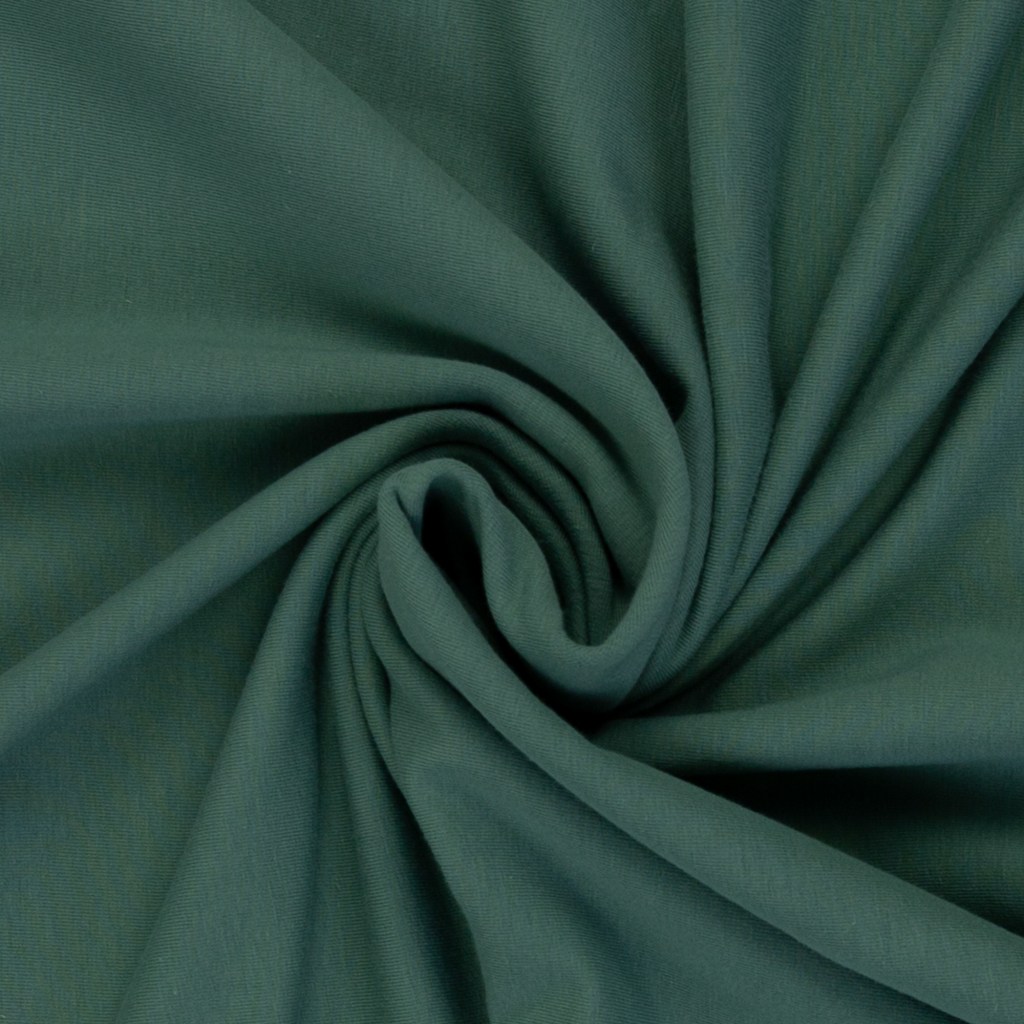
The reason my joggers have lasted six years comes down to the fabric. I’ve experimented with various stretch brushed knits, but my favorite by far is Swafing Eike. This fabric is made of 95% cotton and 5% elastane, has a weight of 245 g/m², and comes in a width of 155 cm. Eike is part of Swafing’s basics collection, making it easy to coordinate with their other fabrics—Vanessa (cotton jersey), Maike (French terry), and Heike (1×1 ribbing). I’ve tried using Heike for the cuffs and waistband in the past, but I just prefer my joggers made from Eike completely.

Subscribe to continue reading
Become a paid subscriber to get access to the rest of this post and other exclusive content.
