As the year wraps up, I’m feeling excited about everything I accomplished in this last quarter. I tackled several big projects, including:
- A 5-part series about pant balance and its importance for fitting (Part 1, Part 2, Part 3, Part 4, Part 5)
- Strathcona Henley by Thread Theory Designs
- Sunday Zip Jacket by Style Arc
- My 2025 iron-on labels
- Down Pants using Know Me ME2041
- A step-by-step guide for elevating your t-shirt pattern with neckline binding
- And the highlight: releasing my e-book, “The Drape Line Approach for Pants Fit: Analyze, Adjust, and Create”
I’m proud to say I completed nearly everything I set out to do this year. Now I’m looking forward to 2025, with new projects already in the works:
- Stitchback Lumbar Pack
- Greenstyle 3R Shorts
- Greenstyle Brassie Joggers
- Sun Hoodie
Flow
Time was my biggest limiting factor this year, requiring me to be intentional with my project planning. After experiencing unprovoked blood clots earlier in the year, my schedule became packed with doctor appointments and physical therapy sessions, alongside prioritizing my recovery and overall health. I also set and achieved big mileage goals, covering an impressive 1,525 miles this year! With so much of my energy dedicated to health and recovery, I didn’t have as much time to sew as usual—because my “normal” has forever changed. Staying active will remain an essential part of my routine, so it is important that I continue to improve myworkflow. So let’s talk about it:
My workflow is a blend of careful planning, experimentation, and efficiency. It starts with gathering inspiration. I explore ideas, dive into pattern options, fabric possibilities, and examples from other makers. To keep everything organized, I create a dedicated folder for each project, where I compile all my findings and ideas. This step helps me visualize the project and refine my direction before committing to anything. I stumbled upon raindrop.io and love it for project planning.
Once I’ve settled on what I want to create, I purchase the pattern and dive into testing. If I can, I use tools like Browzwear to study the fit and design in depth before even printing it out. This stage builds familiarity with the pattern and boosts my confidence for the sewing phase.
Next, I print and tape the PDF, which, though tedious, is another opportunity to study the pattern pieces and details. I create a muslin or test garment from inexpensive fabric, taking as much time as necessary to ensure a good fit. If a technique feels tricky, I practice it until I’m comfortable. For example, when working on the Greenstyle 3R shorts, I spent several days experimenting with elastic and finishing techniques to perfect the leg bands. These practice sessions eliminate hesitancy and set me up for success with the final garment.
Only when I’m completely satisfied with the fit and design do I order fabric and supplies. While waiting for materials to arrive, I use the downtime to plan or start testing for my next project. This approach keeps my momentum going and ensures I’m always ready to jump into the next step.
This upfront investment of time—refining the fit, practicing difficult techniques, and mentally preparing—means that by the time I start the final garment, I feel confident and ready. I’ve read the instructions, tackled the tricky parts, and removed barriers that might cause procrastination. This approach prevents unfinished projects from piling up and keeps me productive.
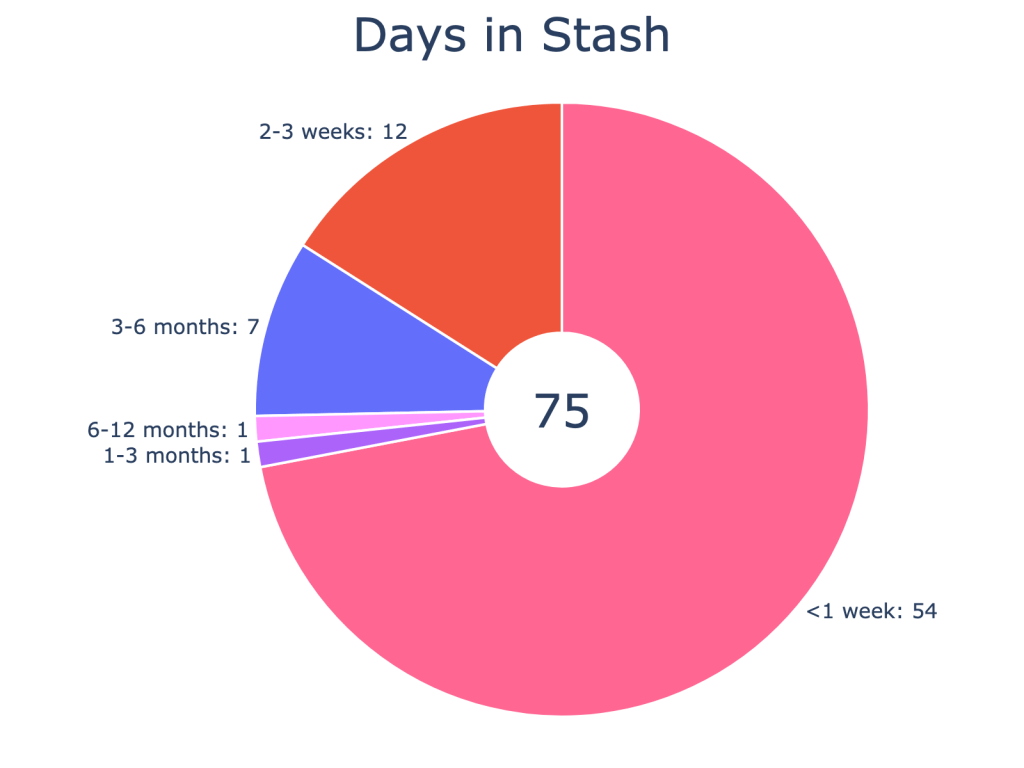
Of the 88 projects I completed this year, 54 were started within a week of the fabric arriving—most of it never even made it to my stash bins! I’m constantly reflecting on my workflow, looking for ways to improve each step. This process keeps me engaged and focused, and I intentionally strive to achieve what Mihaly Csikszentmihalyi describes as flow—a focused, satisfying experience that makes sewing deeply rewarding.
What is flow? Flow happens when challenge and skill align perfectly, creating a sense of focus, enjoyment, and accomplishment. Sewing provides endless opportunities to engage in this state, where every step of the process feels purposeful and rewarding.
Clear Goals and Focus
Having a clear plan makes it easier to stay on track. By thoroughly analyzing a pattern and breaking the project into steps—choosing a pattern, cutting fabric, assembling pieces, and finishing details—I can focus fully on each stage, knowing exactly what needs to be done.
Balancing Challenge and Skill
Flow thrives when the task is just challenging enough to keep you engaged but not so hard that it becomes discouraging. I enjoy pushing myself just outside my comfort zone by practicing tricky techniques or mentalizing the steps of a complex project before starting. This balance keeps the process exciting and motivating.
Focused Concentration
Sewing naturally draws me into the moment. The combination of measuring, cutting, stitching, and troubleshooting demands attention, and I love how the process quiets external distractions. When my hands are busy, my mind is focused.
Immediate Feedback
Sewing is full of real-time feedback. Misaligned seams, skipped stitches, or a perfectly finished topstitch all let me know how I’m doing. This immediate input helps me stay on task.
Sense of Control
Flow arises when there’s a sense of mastery over the task, even if the project is complex. When I can fix mistakes, troubleshoot problems, and try new methods, this makes me feel empowered and confident that I have control over the process. I have no problem pulling out my basting needle and thread to hand-baste something together if it is being finicky.
Loss of Self-Consciousness
When I’m in flow, the outside world fades away. My focus shifts entirely to the task at hand—pinning, stitching, and fitting—and time seems to disappear. Hours can pass without me even noticing.
Intrinsic Reward
The process of sewing itself is deeply satisfying. From honing my skills to seeing a garment come together, every part feels rewarding. The finished project is just the cherry on top, a tangible reminder of the joy in creating something meaningful.
Iterative Learning and Growth
Each project is a chance to learn, experiment, and grow. With every garment I make, I refine techniques, test new ideas, and stretch my abilities. This constant cycle of improvement keeps sewing fresh and ensures there’s always something new to look forward to.
Totals
My only goal for 2025 is to continue to think about my workflow and always try to improve my process. Now let’s break down the numbers for 2024: I completed 88 projects this year, including 22 pairs of underwear! The biggest challenge was keeping up with my ever changing body and I’ve mostly coped by living without a lot of items (e.g., hard pants). Thankfully since I work from home, wearing nothing but biker shorts and joggers hasn’t been a problem.

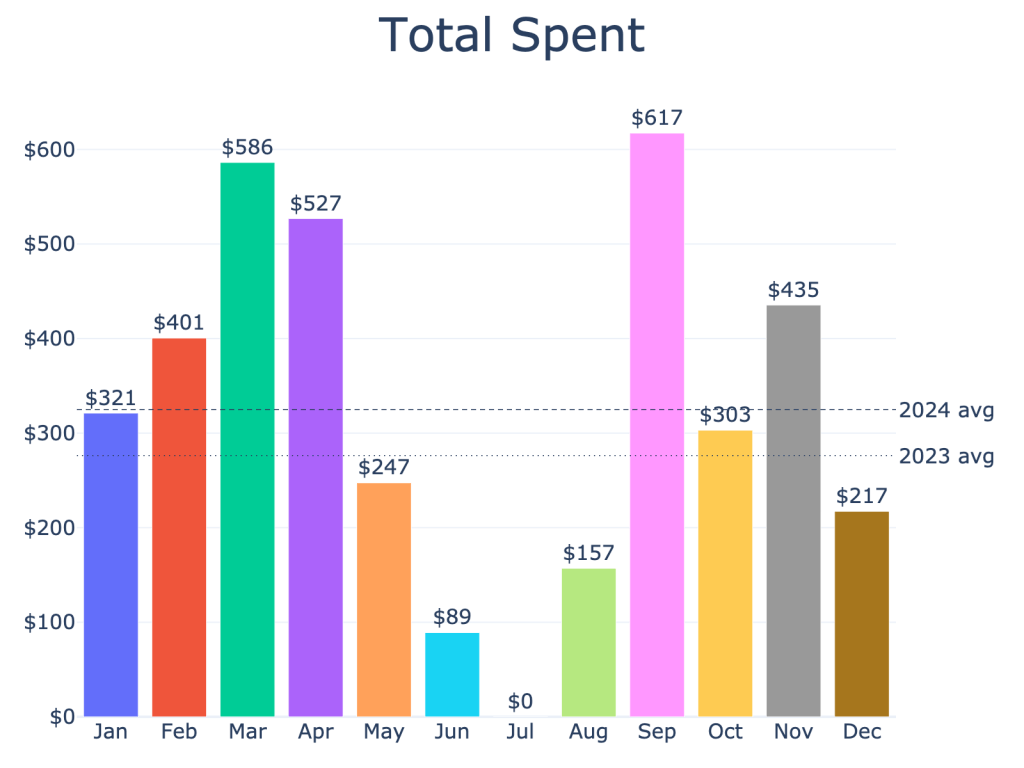
In total, I spent $3,901, averaging about $325 per month.
While I spent less time sewing compared to 2023, my sewing space has been evolving and improving, which helps me work more efficiently. I rearranged my furniture recently, and it’s been a game-changer. I don’t waste as much energy moving from area to area anymore.
If your workspace feels tedious or frustrating, I highly recommend evaluating why. Is it the layout? A specific task you dread? One of my favorite approaches comes from Adam Savage on his Tested channel. He suggests imagining your workspace with a magic wand: What would your ideal setup look like? Verbalizing your struggles and ideal solutions is a great starting point. He even recommends completely emptying your space to start fresh if needed. Whatever it takes to gain a new perspective! My magic wand would be having a Beatrice form and half-size form for all my fit testing.
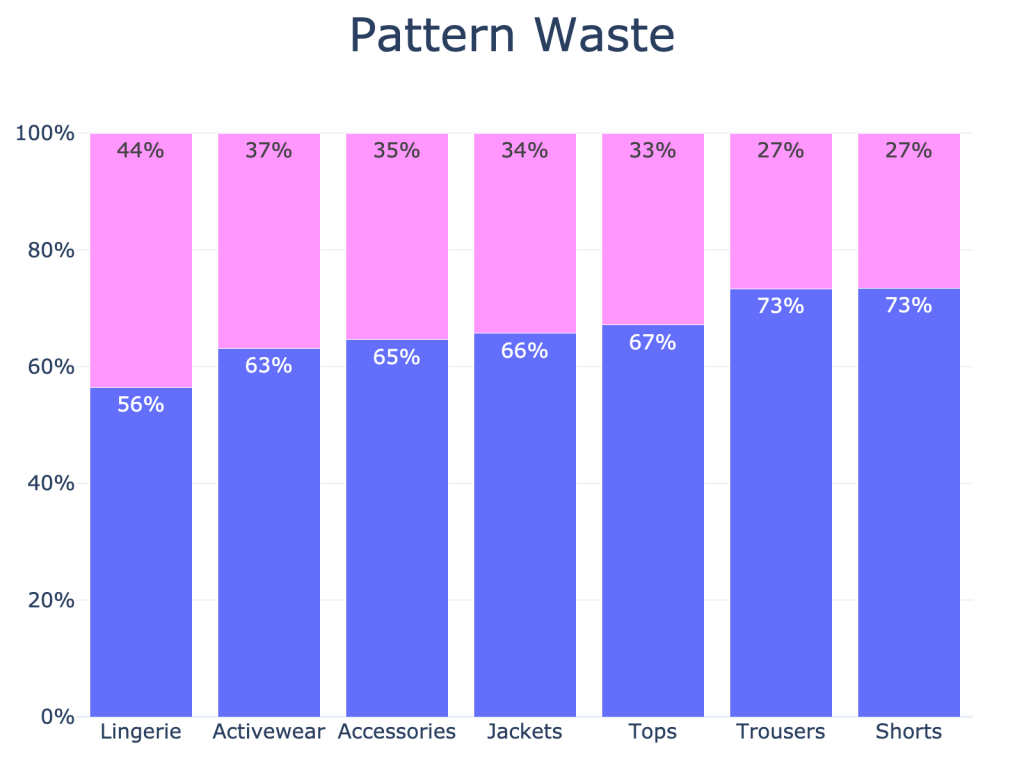
Stash Usage and Fabric Waste
Tracking fabric usage and waste has been surprisingly satisfying this year.
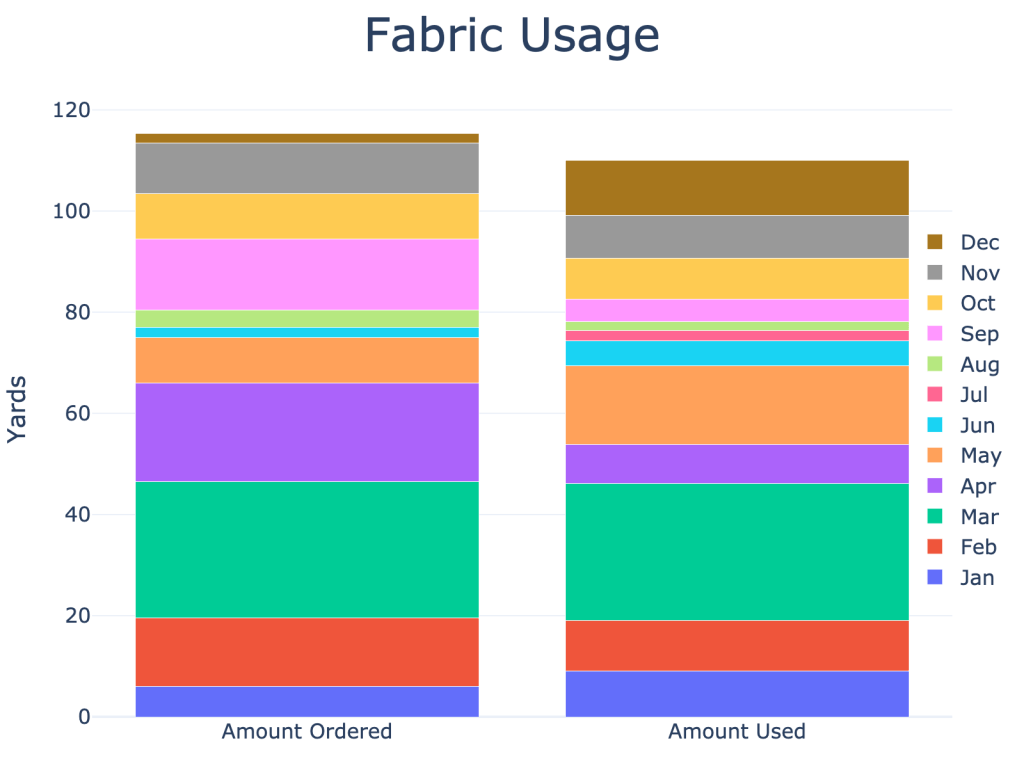
I purchased about 115 yards of fabric and used 110 yards, keeping my stash in check.
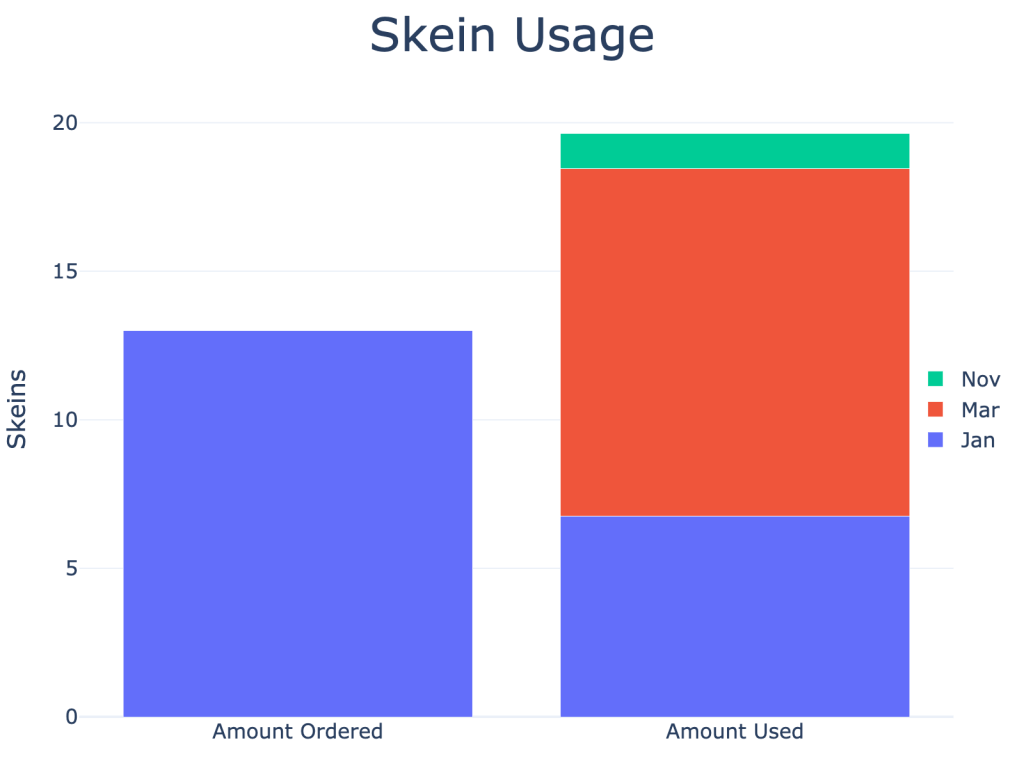
I’ve done hardly any knitting, but that’s okay—it wasn’t a focus this year.
Cost and Time Breakdown
Of the $3,901 I’ve spent, $2,563 went to fabric and $648 to notions. That makes up more than 80% of my spending this year. The rest has been on things like machine repairs, patterns, yarn, samples, and fabric for pattern testing.

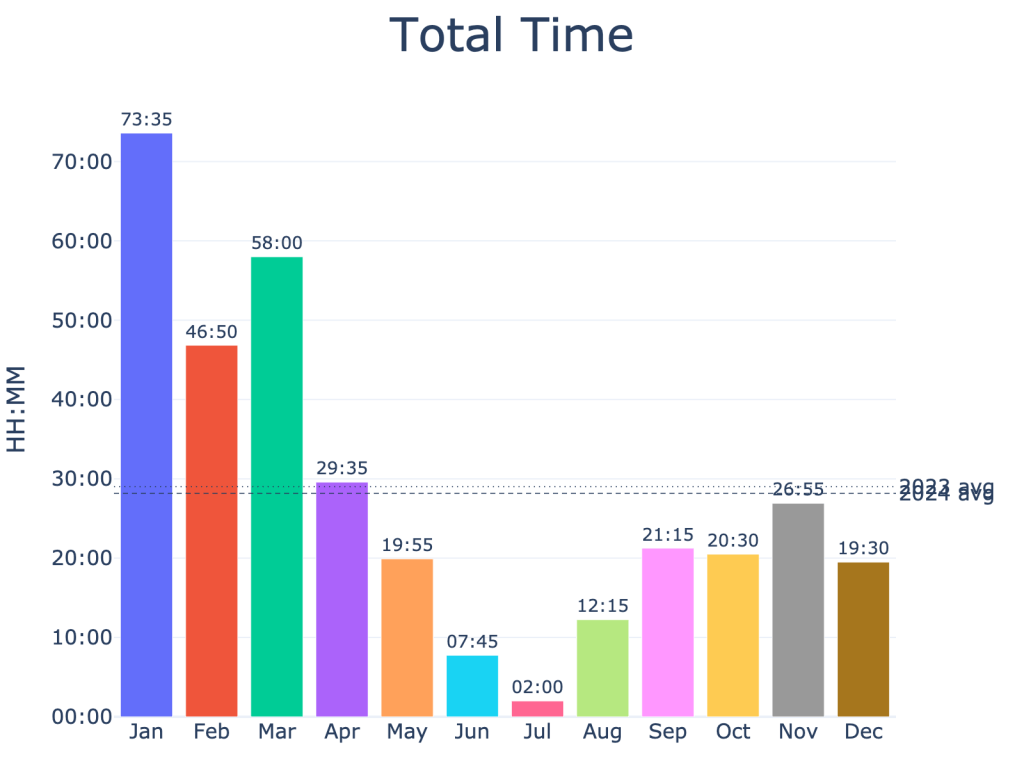
Here’s how my time has broken down this year: almost 135 hours of sewing, 121 hours of knitting, nearly 40 hours of testing, 19 hours of mending, 15 hours of cutting fabric, and 7.5 hours of taping together PDFs. Taping together PDFs takes less than 3% of my time, and it’s a great way to get familiar with the pattern pieces and think about construction ahead of time.
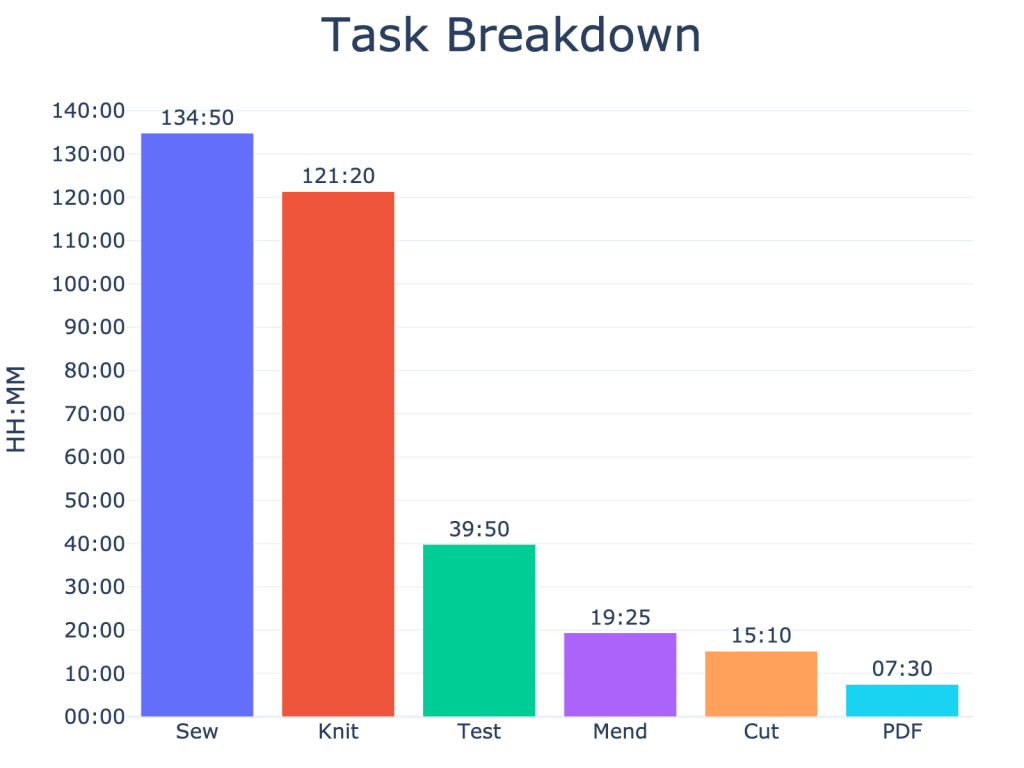
Yes, it took me 123 days to finish knitting a pair of socks. Like I said, knitting hasn’t been a priority this year. Otherwise, most projects take me a couple of hours across a few days.
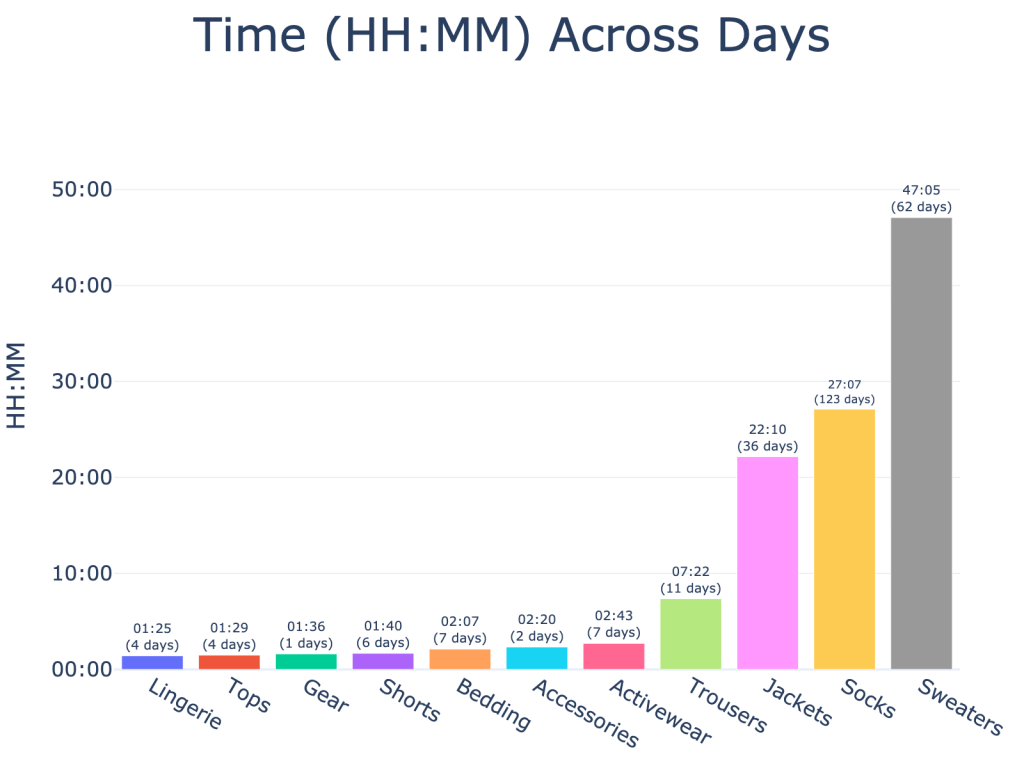
Project Breakdown
One of the things I love most is the variety of projects I get to work on—it’s not just pants and tops all the time. I made so many pairs of underwear this year and I’m a master at foldover elastic now!
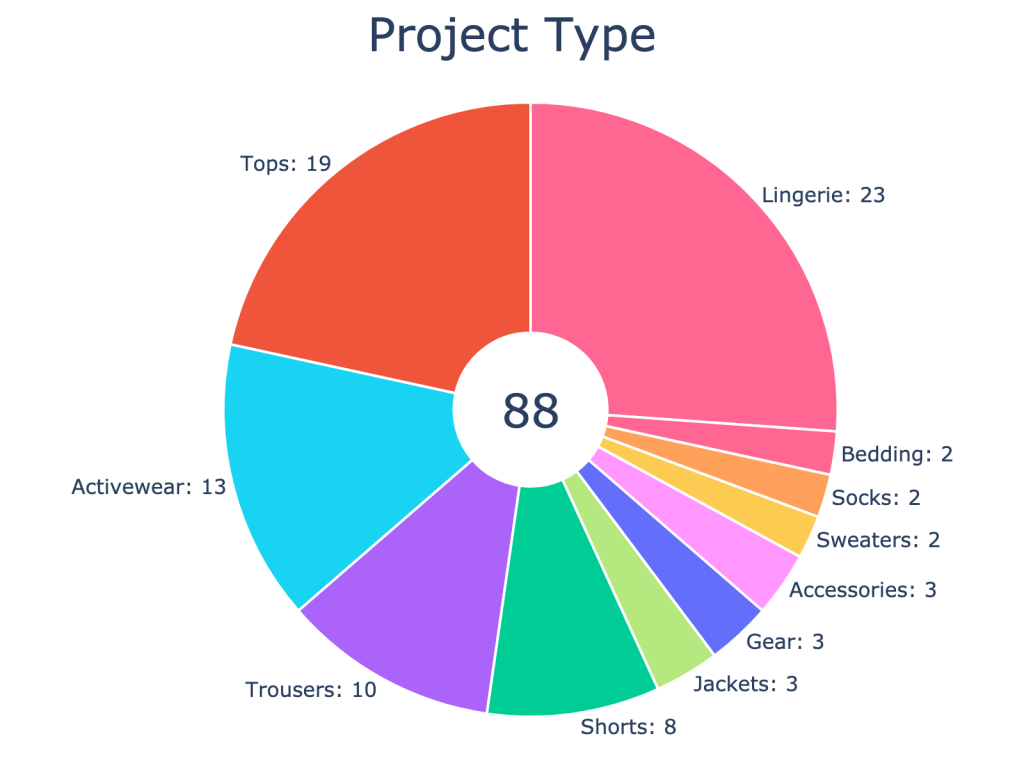
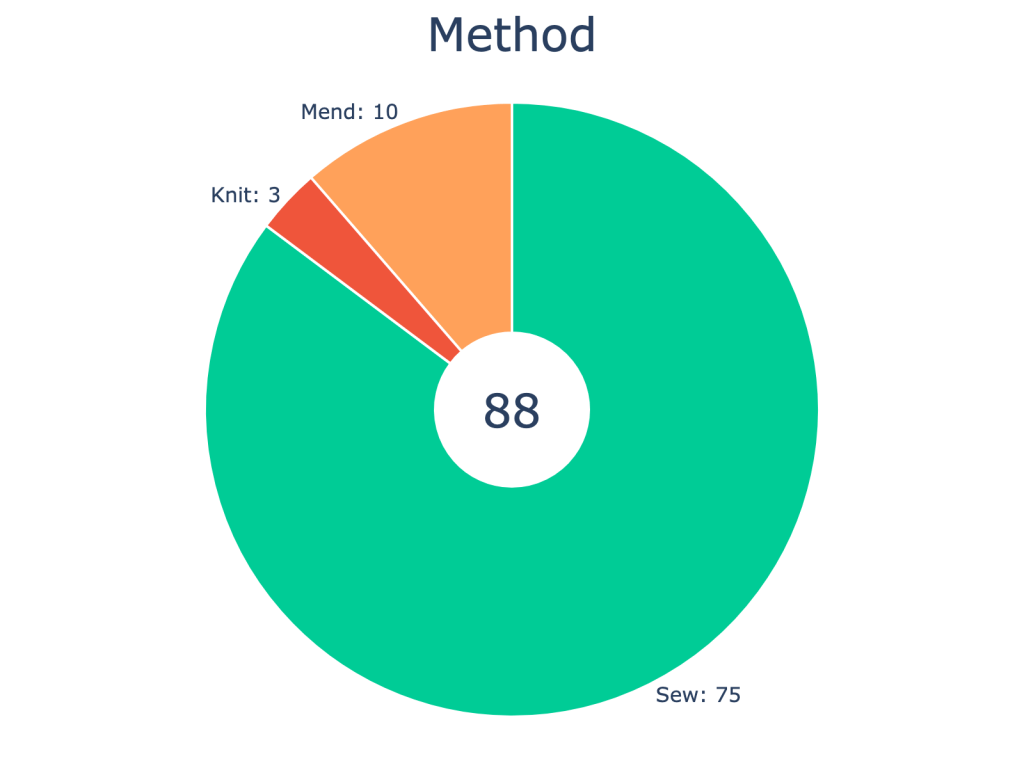
This year, I’ve spent more time redoing or mending old projects, which has been great for practicing the best ways to remove serger stitches on different fabric types. I enjoy having the space to let my mind wander while unpicking a garment.
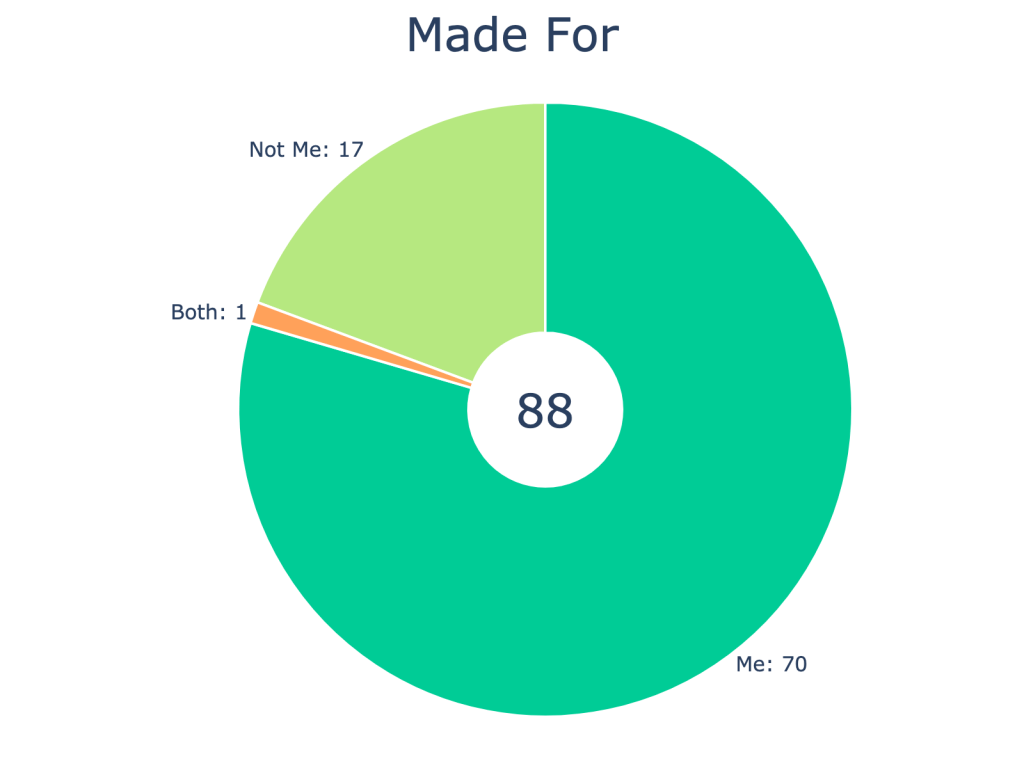
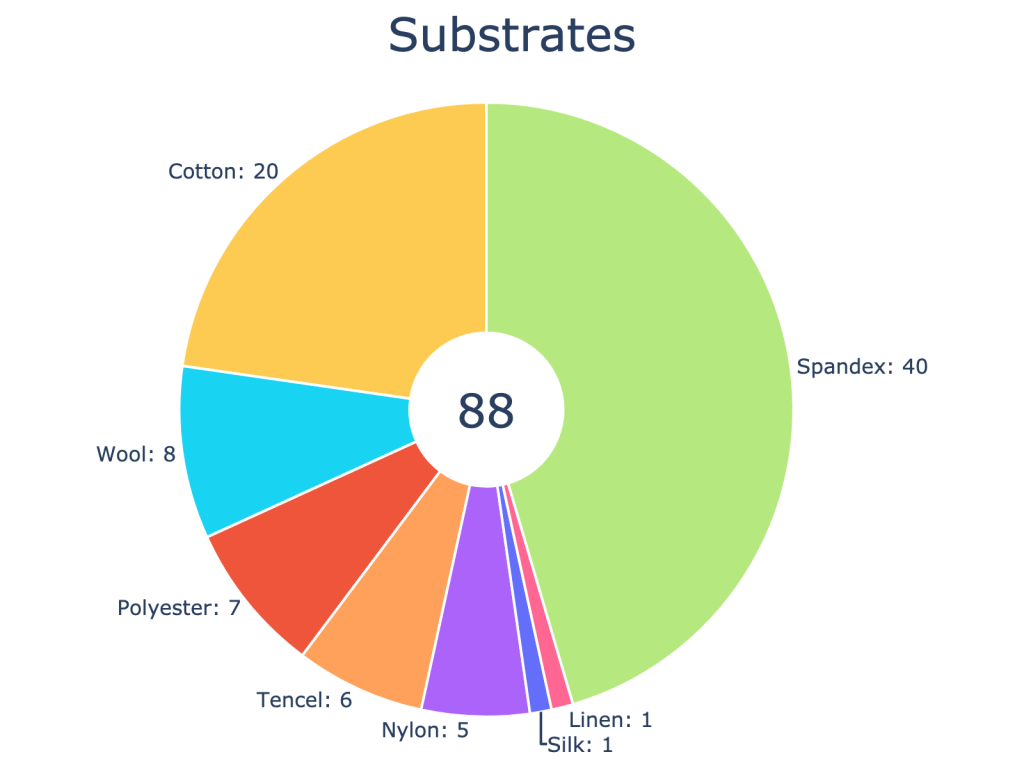
I definitely sewed mostly for myself this year, replacing a lot of necessities: underwear, bras, t-shirts, and activewear.
Part of taking on new projects that challenge my skill set includes experimenting with new fabrics whenever possible. Working with a wide variety of fabric types has been an excellent way to practice and refine my techniques.
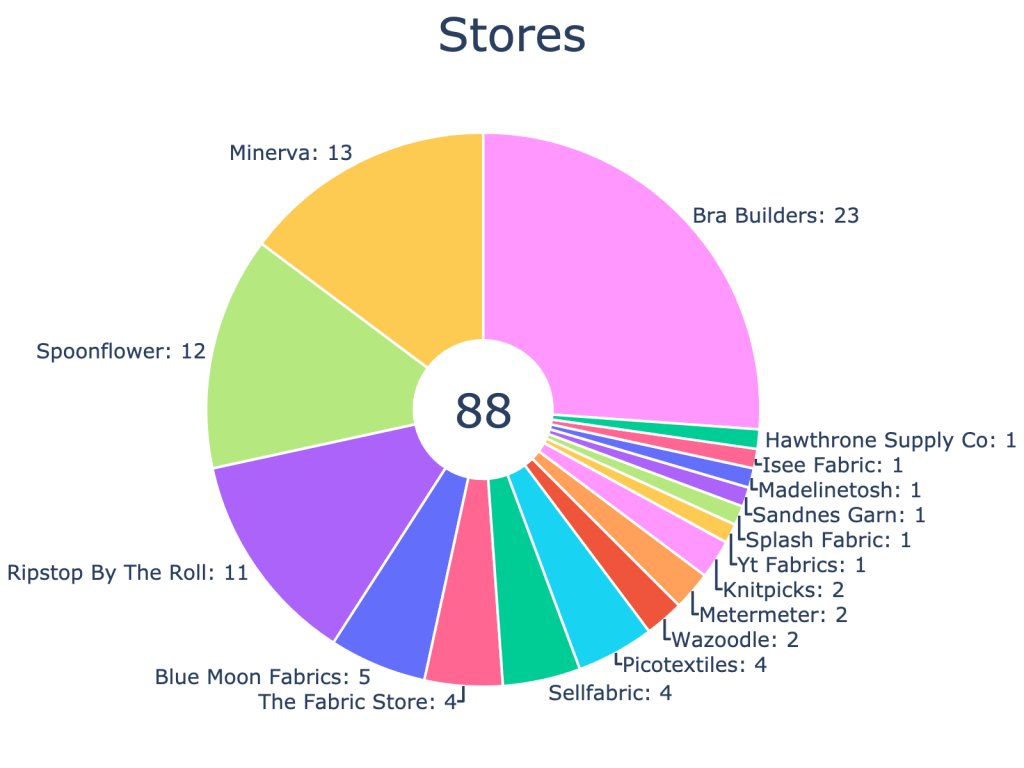
Here are the stores I’ve shopped so far this year.
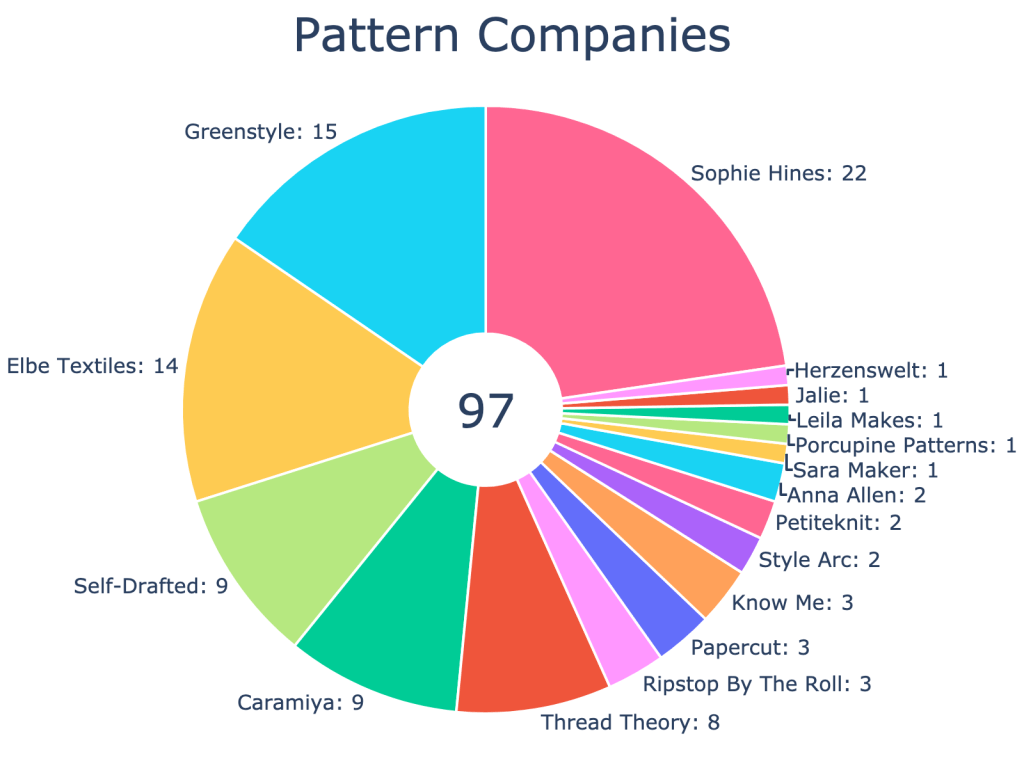
I definitely had a lot of repeat makes this year: 22 Sophie Hines, 15 from Greenstyle, 14 from Elbe Textiles.
I’ve been balancing my color choices well this year. The one exception is red—it hasn’t seen much love, as Ryan and I aren’t big fans of the color.

Blood Clots
I’d be remiss not to acknowledge that my greatest accomplishment this year is simply surviving. After experiencing pulmonary embolisms and deep vein thrombosis (DVT), I overcame the daunting 1-in-4 odds. Before 2024, I didn’t have a primary care physician, rarely saw a doctor, and firmly believed in “toughing it out” whenever I felt unwell or in pain. This year has been a humbling lesson in recognizing that my intuition about when to seek medical help was completely wrong. Building a rapport with my primary care physician and embracing medical guidance has definitely been a learning experience.
Hydration and Electrolytes
One of the biggest lessons I learned is that I had no idea how to hydrate properly. As someone who swam competitively as a teenager and hikes avidly as an adult, I’ve always struggled with hydration. Despite drinking plenty of water, I often felt chronically thirsty and occasionally experienced symptoms of extreme dehydration, including fatigue, brain fog, dizziness, nausea, dry mouth and lips, headaches, and a rapid heartbeat. I assumed the solution was simply to drink more water, even though these symptoms persisted while I was consuming over 5-6 liters daily. Ironically, I was likely overhydrating and flushing out vital electrolytes, leading to frequent urination—even waking up at night if I drank water too late in the evening. Looking back, I realize my hydration struggles may have been linked to my unprovoked clots, as dehydration increases clotting risk.
My hospitalization for dehydration this year was a wake-up call: it wasn’t about drinking more; it was about drinking smarter. I desperately needed to replenish electrolytes in addition to fluids. Two tools have made a world of difference for me: the WaterMinder app, which helps me track my hydration throughout the day, and unflavored LMNT packets, of which I now use 2–4 daily. Previously, I’d been relying on just half a packet of LMNT and then plain water with lemon for the rest of the day, which wasn’t nearly enough to meet my needs.
After experiencing blood clots in my right hip, leg, and chest, dehydration noticeably intensified the pain in these areas. With my veins now extra sensitive, proper hydration and maintaining adequate electrolyte levels have been crucial. By managing these effectively, I’ve been able to support my recovery and feel much better.
National Blood Clot Alliance
If you or someone you know has experienced a blood clot, I cannot recommend the National Blood Clot Alliance (NBCA) enough. Their resources and support are invaluable and have been a lifeline for me during this journey. Here are some of my favorite videos and podcasts from this year:
Other Things I’ve Enjoyed this Year
I’ve tried to move away from things that demand my constant attention or input (e.g., Instagram and other social media platforms). Also, I haven’t read as many books this year as I would have liked but I have enjoyed a lot of other media.
First, KEXP.org will always be my number one recommendation. My favorite show during the week is Mondays 3-5AM, Sounds of Survivance, featuring global indigenous music from all genres. After that, here are some wonderful YouTube channels:
- Cupcake Jemma: I absolutely love baking and cooking, and her channel has been such a treat.
- Drumeo: There have been so many fantastic videos that it’s hard to pick a favorite. Mike Portnoy learning “Pneuma” was what initially got me hooked, and I’ve been captivated ever since.
- Shift Fashion Group: This channel has been a treasure trove of information about the garment and fabric industry. I cannot wait to see what they share in 2025.
- The New Yankee Workshop: Who doesn’t love watching Norm Abram create seemingly impossible builds? His craftsmanship is endlessly inspiring.
- Rick Beato: I’m obsessed with his interview with Danny Carey—it’s an absolute standout—but I’ve also really enjoyed his conversations with Dweezil Zappa, Rick Rubin, Jimmy Chamberlin, Mark Tremonti, and Mike Dawes. Speaking of Mike Dawes, his music is now on repeat for me!
- Adam Savage’s Tested: It’s always fascinating to dive into his thought processes and methods for maker organization and space. Plus, the MythBusters anecdotes are such a nostalgic bonus!
- Alvanon: I’ve turned to this channel for the latest insights into sizing trends, which has been incredibly valuable.
- Fix This Build That: A fantastic resource for all things DIY and woodworking.
- Stop the Clot: This channel has been a supportive and educational resource after my own experience with blood clots.
- Sew Sew Live: I’ve spent countless hours watching Saremy’s channel, and it’s always time well spent. I wish I had more time to actively participate in her sewing guild, but I’m so grateful for how much she freely shares on YouTube—it’s truly fantastic!
Happy New Year
As I step into 2025, I’m energized by the progress I’ve made and the projects ahead. I hope my journey inspires you to reflect on your own creative processes, set goals, and maybe even reorganize your workspace. Here’s to a new year filled with creativity, learning, and, of course, plenty of finished projects!

IF YOU FOUND THIS POST HELPFUL, CONSIDER SUPPORTING MY WORK BY SIGNING UP FOR A PAID SUBSCRIPTION.
POSTS OLDER THAN 3 MONTHS ARE NOW FOR SUBSCRIBERS ONLY — YOUR SUPPORT KEEPS THIS SPACE GOING.
INTERESTED IN SUBSCRIBING TO RECEIVE NEW POSTS IN YOUR INBOX?

Found it! Such a beautiful down jacket and a very happy face! Well done!
Glad you were able to find the pattern you were looking for!
Hi there, I am so happy I found your blog again after many years of not sewing. I am very sorry to hear that you have been so unwell, I wish you all the best for a full recovery.
This post is so impressive , I love all the statistics. And of course the quick turn around of fabric in your house. I used to live in NZ and have acquired a large stash there, mainly because most fabrics were dead stock and a one off. Also, the last mills were closing down and I am very happy to have stacked up on beautiful wool fabrics.
Now we live very rurally in Sweden and I am so happy to have my stash. The few times I had to order something were challenging. The online shops in our country are very expensive but the quality can still be a surprise. I got some 1.5 inch elastic the other day and am very surprised that it has not much of stretch, maybe 50%. The one I had previously had maybe three or four times that. Anyway, it’ll work out one way or another.
Would you mind sharing the patterns that you sewed in 2024? I am particularly curious about the one from Meine Herzenswelt. They have a great softshell jacket with detachable fleece lining that I am keen to make for my husband.
I feel fortunate to live in an urban area where shipping is never an issue. I can’t imagine the challenges I’d face if I lived in a more rural area with limited access to online fabric stores—it would definitely require a completely different approach. However, city living comes with its own trade-offs. In our small condo, space is always at a premium, so I’m constantly juggling where to store things. I suppose that’s the compromise for the convenience of excellent shipping options.