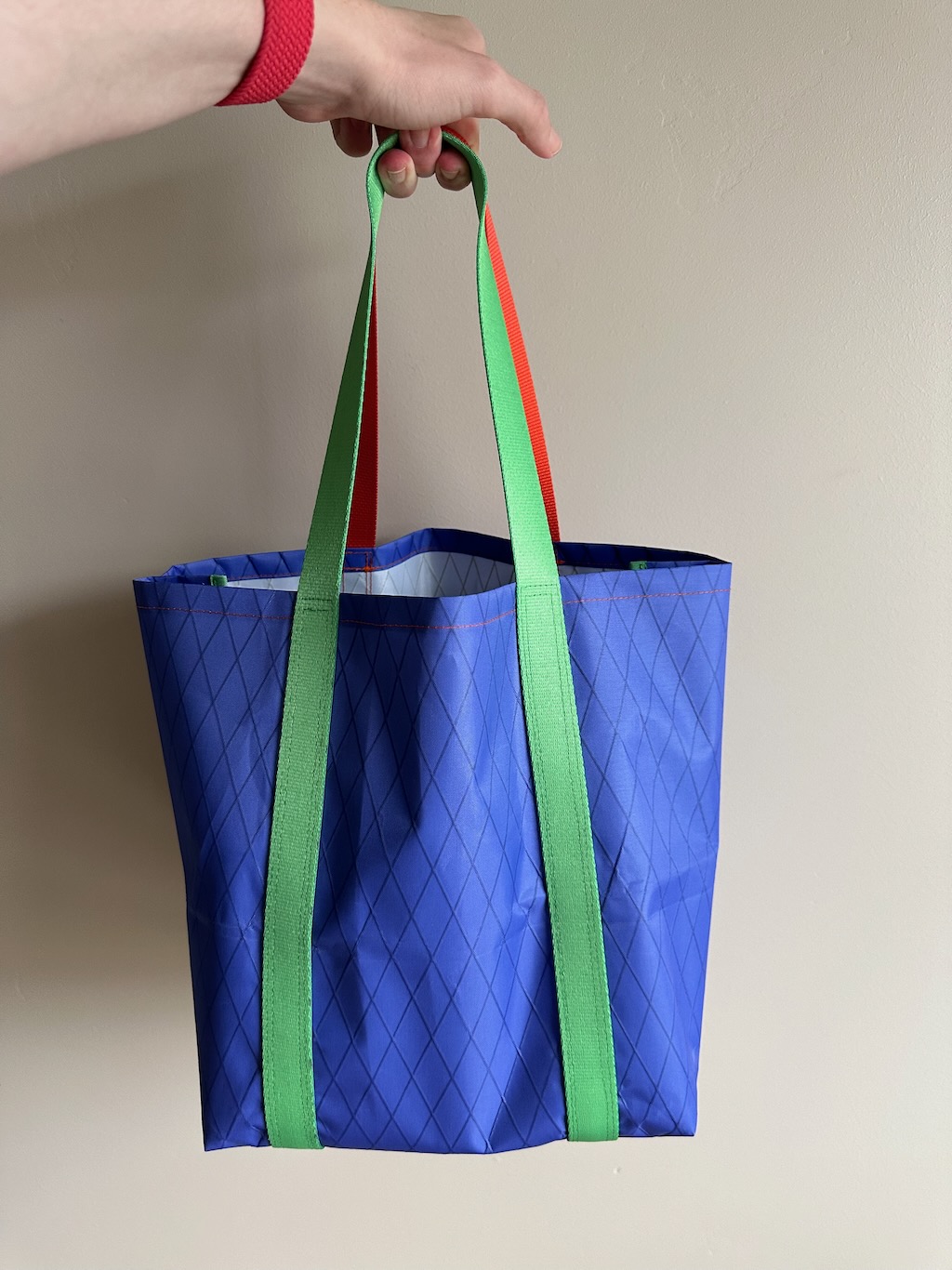
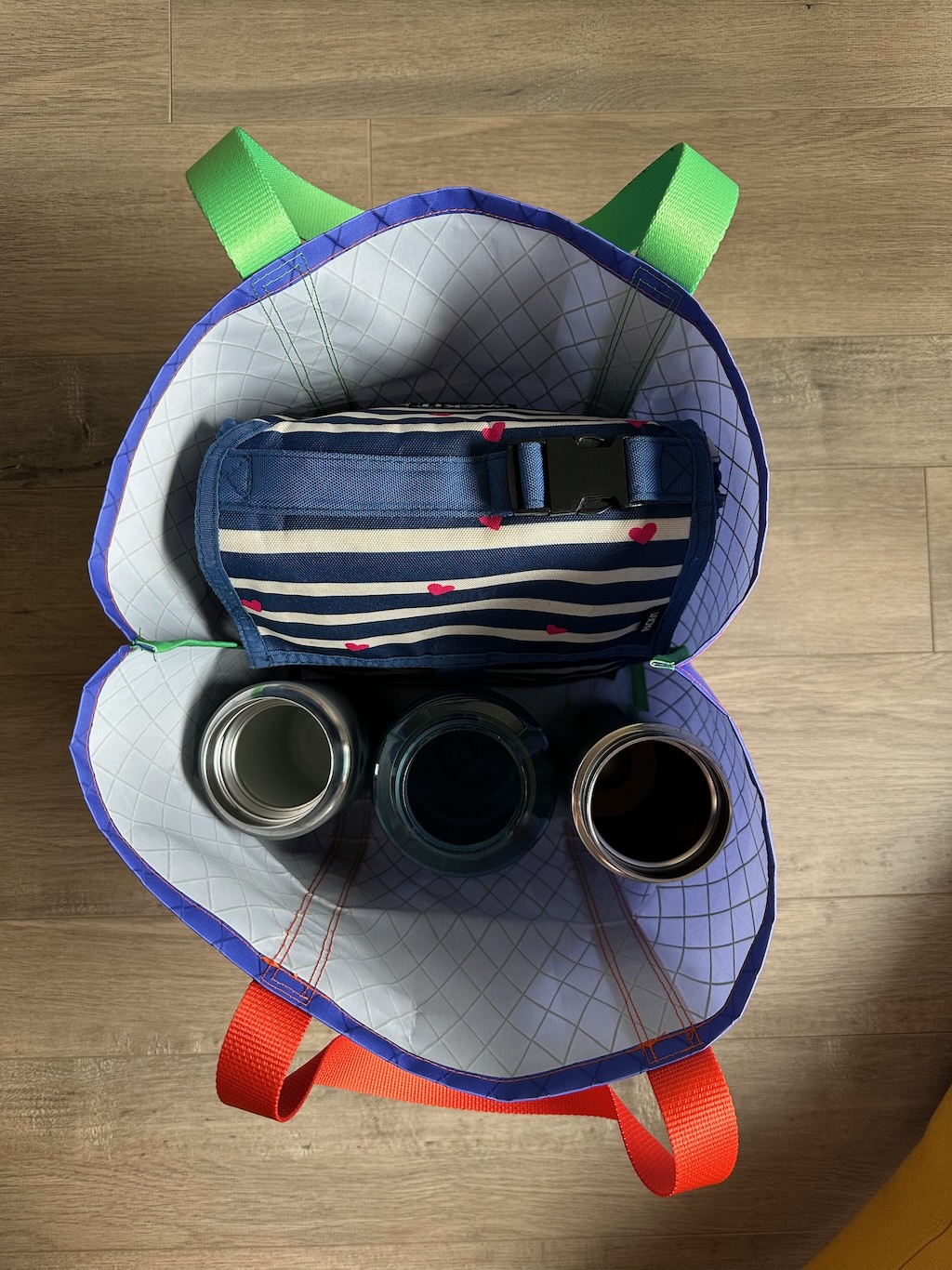
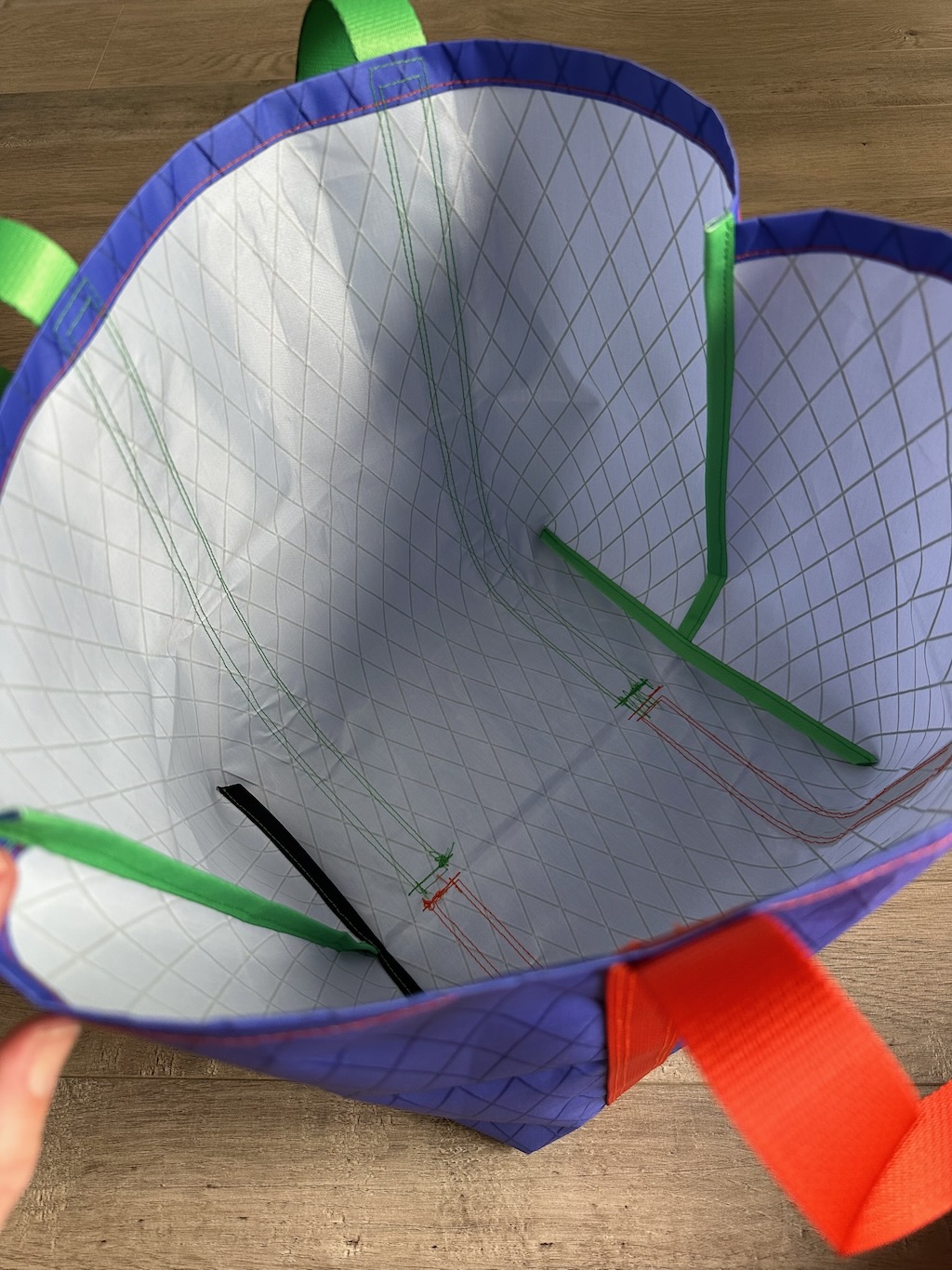
Ryan desperately needed a new tote bag to carry his many bottles and lunch bag. The old bag was frayed and falling apart. Moreover, it couldn’t hold all three bottles and his lunch bag. I figured out the footprint needed to fit everything (12 inches tall, 10 inches wide, and 9 inches deep). However, trying to determine how to convert that to a template was tricky.
Python Pattern Generator
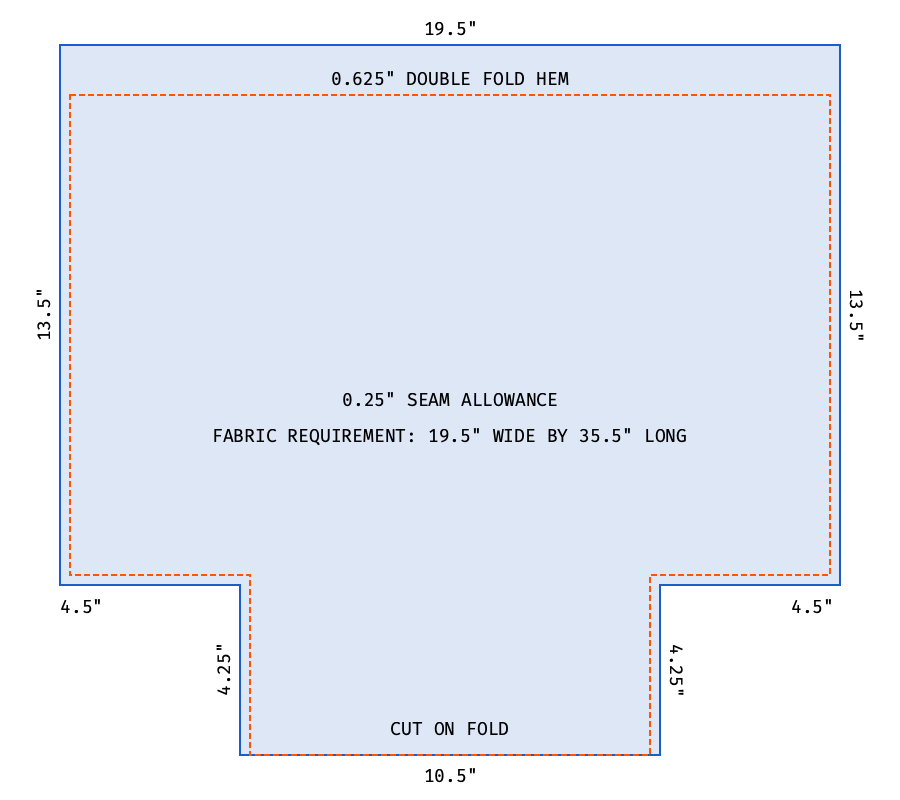
Of course, once I figure out how to go from final dimensions to a template, I put it together as a Python script that outputs a nifty image of measurements. You can adjust the height, width, depth, seam allowance, and double-fold hem amount.
GitHub
I’ve uploaded my code to GitHub for anyone who wants access: https://github.com/HandmadePhD/tote-pattern
The Python code is stored as a Jupyter Notebook with instructions on how to run locally. If you have any issues, please just report them under the Issues tab on GitHub.
Examples

You can go from the smallest bag ever: 1 inch tall, 1 inch wide, 1 inch deep, 0.25-inch double fold hem, and 0.25-inch seam allowance.
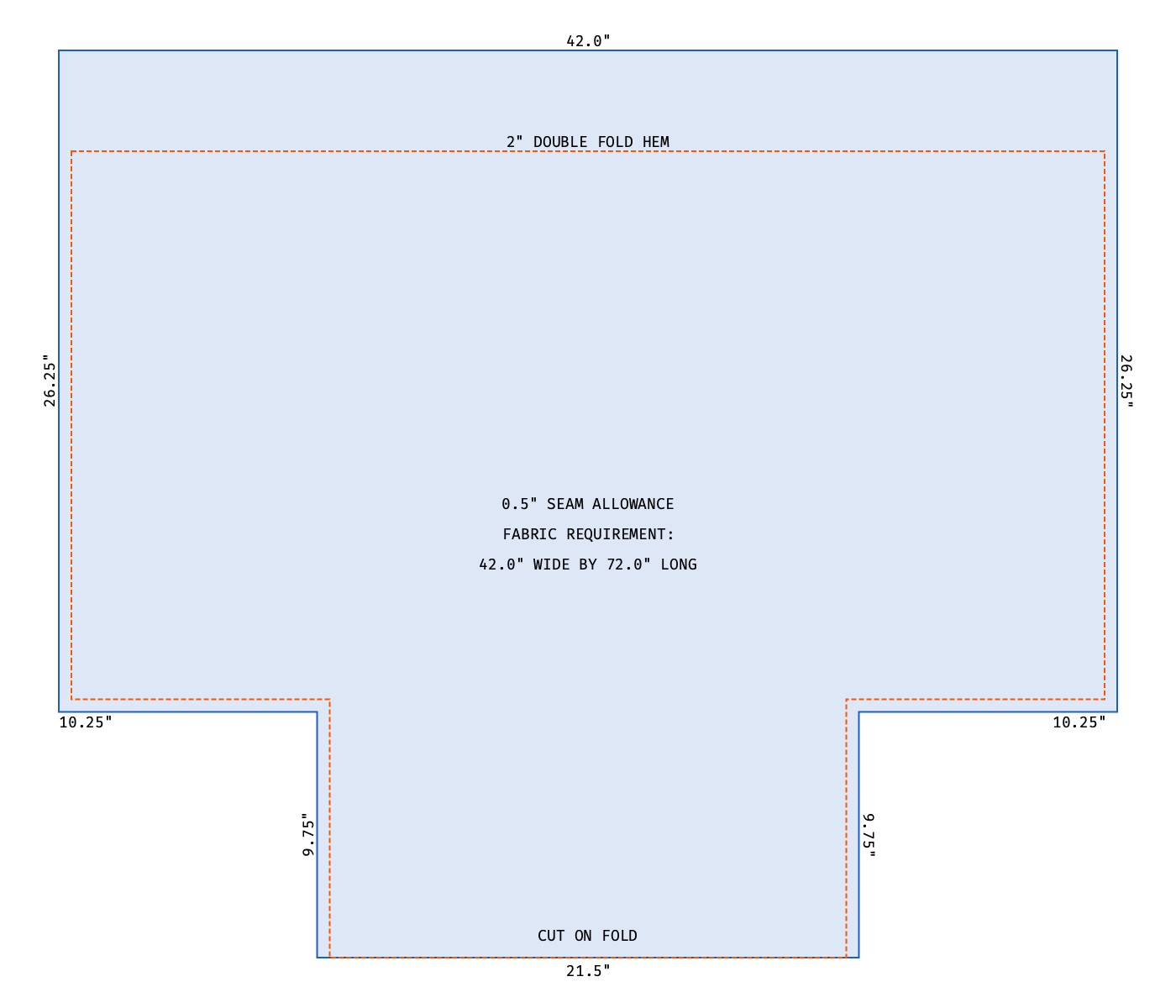
Or design a huge bag: 21.75 inches tall, 20.5 inches wide, 20.5 inches deep, 2-inch double fold hem, and 0.5-inch seam allowance.
Helpful Tips
If your pattern renders oddly, it is likely due to one of the input values. Larger seam allowances (i.e., 1/2 inches or bigger) will cause issues, especially when your depth is smaller (i.e., 4 inches or smaller). I would stick with a 1/4-inch seam allowance whenever possible. The bag’s depth can also cause issues if it is not big enough. If the seam allowance is 1/4 inch, adjust the depth to be bigger. That should fix most problems.
Remember that the f-value is just a random factor used to increase the overall size of the pattern. Python uses pixels to draw the pattern, but the input values are in inches. Two inches is much larger than 2 pixels. Therefore, I multiply all numbers by f, so if f = 30, two inches becomes 60 pixels when drawn by Python. The f-value can be anything from 1 to 1000.
Supplies
I have a bunch of scraps and leftovers from when I made packs in May and I just used those supplies. I used X-PAC® VX15 from Ripstop by the Roll for the body of the bag. The handles are webbing from RBTR. I encased the raw edges with grosgrain ribbon, again from RBTR.
- Fabric: https://ripstopbytheroll.com/collections/omnicolor-solids-fabric/products/omnicolor-solids-fabric?variant=12403273072688
- Webbing: https://ripstopbytheroll.com/collections/webbing/products/1-polyester-webbing-1500-lb-colors
- Grosgrain ribbon: https://ripstopbytheroll.com/collections/grosgrain-ribbon/products/solid-color-grosgrain-ribbon
Instructions
If you need instructions, you can also follow the RBTR tutorial online. I deviated from the instructions only when finishing the raw edges. I added grosgrain to my side seams before sewing the bottom box seam. I added grosgrain to the bottom box seam as well. In other words, all the internal seams are finished with grosgrain ribbon.
Final Bag


Summary
I have some leftover ABS plastic that I can cut to fit the bottom of this tote to give it even more rigidity if needed. The bag has enough stiffness that it stands up on it’s own, but adding that flat base would make it extra secure.
This project was super easy and I really appreciated being able to use scraps and leftovers from my previous projects. Ryan has a great new tote bag for all his stuff and he absolutely loves the hodgepodge of colors and materials.
IF YOU FOUND THIS POST HELPFUL, CONSIDER SUPPORTING MY WORK BY SIGNING UP FOR A PAID SUBSCRIPTION.
POSTS OLDER THAN 3 MONTHS ARE NOW FOR SUBSCRIBERS ONLY — YOUR SUPPORT KEEPS THIS SPACE GOING.
INTERESTED IN SUBSCRIBING TO RECEIVE NEW POSTS IN YOUR INBOX?

Ahhhh this is so cool, thank you! The world needs more Python scripts for creating sewing projects!
I completely agree!