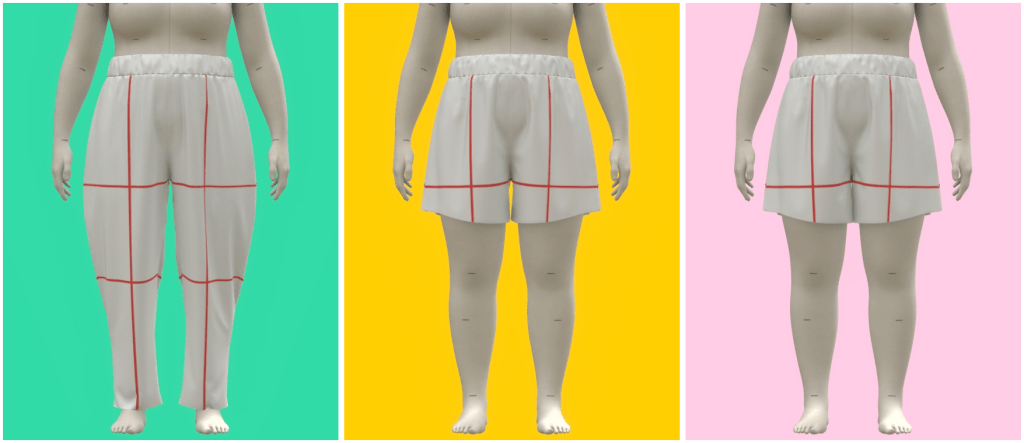
In this post, I’ll cover two important topics. Firstly, the significance of studying the style and fit of pants. Secondly, I’ll delve into the process of transforming full-length pants into shorts. Last month, I wrote a post about the Dani Shorts by True Bias and shared my experience transforming full-length pants into shorts. However, I found the pattern to be drafted peculiarly. The front pattern piece had 3/8 inches added to the side seam and inseam, while the back pattern piece had 1/2 inch added to the side seam and 1 inch added to the inseam. I asserted that if shorts are going to be widened at the hem, the side seam and inseam need to be widened by the same amount. While the front and back can be adjusted differently, the inseam and side seam should match. If you add an uneven amount to one side of the shorts’ hem, you are, in essence, moving the center grainline placement, thus causing the leg to swing off balance. This post compares size 20 pants and shorts, and I demonstrate what happens if you widen the hem of the shorts unevenly.
Style and Fit
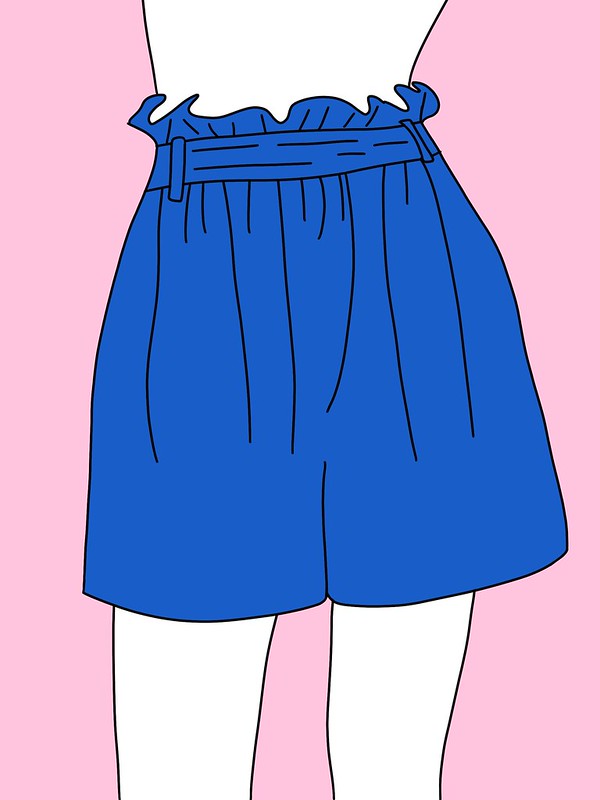
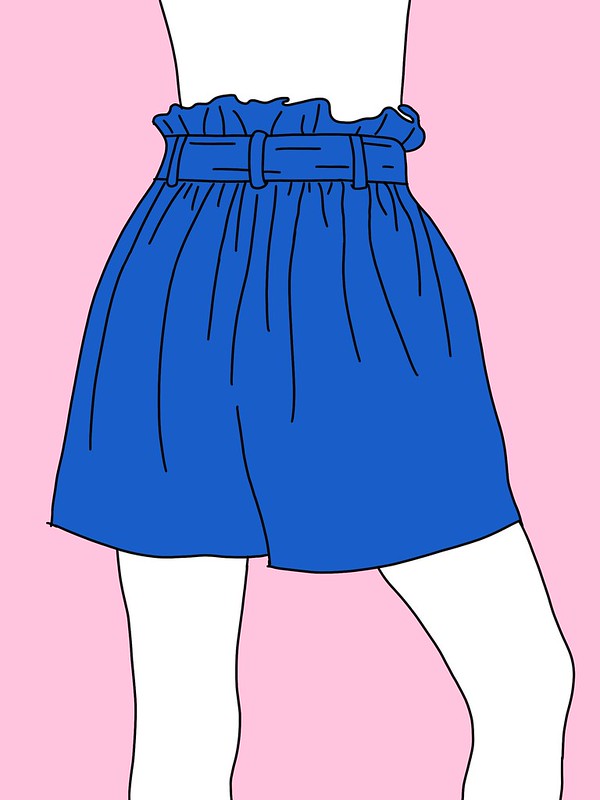
First, I would like to discuss the design of these pants as they fit uniquely. The design is often referred to as a paper bag style, and it has a noticeable high-waist design that includes a gathered waistline that resembles the top of the paper bag when cinched. This means there should be lots of ease and extra fabric across the torso. In other words, the pants from the waistband to the hips should have more volume than regular shorts. Depending on the style, a lot or a little fabric may be gathered around the body. It’s important to note that the shorts will not have a smooth and fitted look. That’s not the intended design. To help illustrate the style of the Dani pants/shorts, I created a Pinterest board to highlight makers that did an excellent job showing the overall fit of this pattern.
For this particular blog post, I decided to show the original pattern without making any alterations. Some people might be tempted to remove the excess fabric around the torso, but remember, the pattern isn’t designed to be smooth and fitted. When I tested this pattern, I found that the center grainline placement matched my body perfectly and hung straight. I only needed to adjust the overall rise. The extra fabric around the center back seam is normal. That’s the look. Don’t be tempted like I was initially, and try to smooth out the pants.
Making Shorts
When you shorten full-length pants into shorts, the assumption is that you’ve gone through all the steps of getting the full-length pants draped correctly for your body. This includes ensuring the waistband sits where you want, you’ve adjusted the pant rise, the center grainline bisects the horizontal knee level, and the center grainline at the crotch level matches up with your body (i.e., laser level method). Once those steps have been completed, you can shorten the legs into shorts.
Pattern Drafting Anomalies
The drafting of the shorts varies across sizes. The size 18 in the 0-18 range is identical to the size 18 in the 14-32 range, so the difference is based on size, not size range. When I made the Dani shorts, I made the size 18 shorts in the 0-18 size range. And here’s how the shorts were drafted compared to the full-length pants.
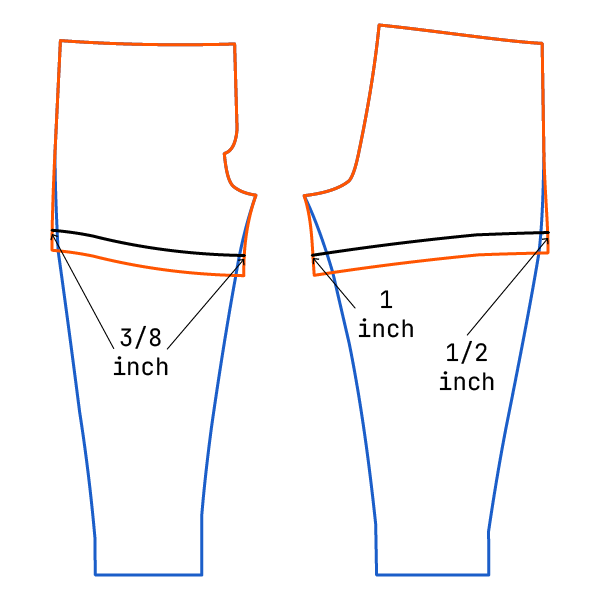
The shorts have the hem attached in this figure, and I drew a line representing the hem’s bottom. Looking at the shorts hem, the front pattern piece had 3/8 inches added to both the side seam and inseam. The back pattern piece had 1/2 inch added to the side seam and 1 inch added to the inseam. This will result in fit issues. To avoid this, I made my shorts with 3/8 inches added to the front inseam and side seam and 1/2 inch added to the back inseam and side seam. It’s OK if the front and back are widened by different amounts, but within the front piece, the inseam and side seam needs to be widened by the same amount. Likewise, within the back piece, the inseam and side seam must be widened by the same amount.
Balanced Front and Back Hem
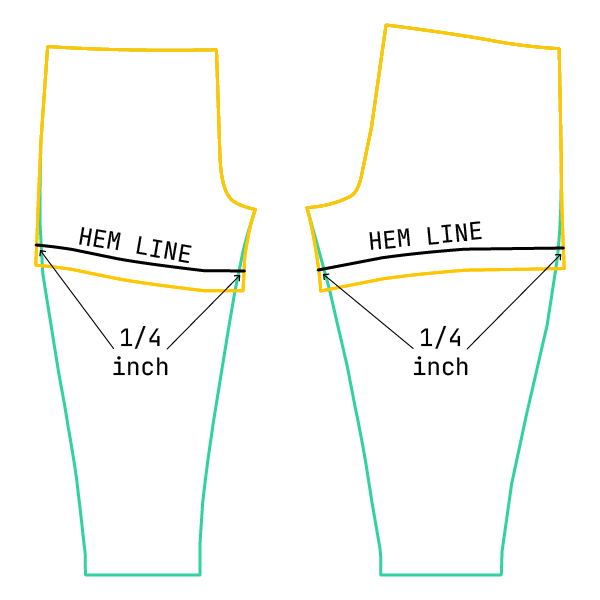
Size 20 has the shorts drafted correctly, even though the size 18 did not. The shorts are widened along the hem equally along the side seam and inseam. This is correct. This is how the shorts should be drafted.
Unbalanced Back Hem
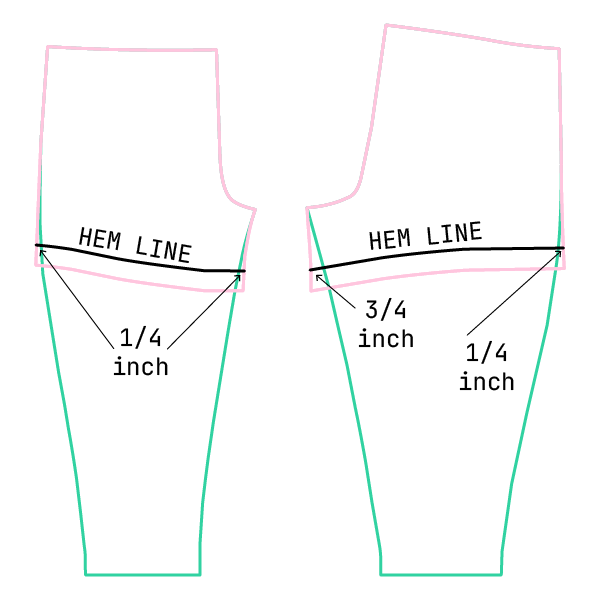
To illustrate the issue when the hem is widened unevenly, I altered the size 20 pattern to mimic how the size 18 shorts were drafted. Instead of adding 1/4 to the side seam and inseam on the back piece, I added 3/4 inch to the inseam and only 1/4 to the side seam.

Subscribe to continue reading
Become a paid subscriber to get access to the rest of this post and other exclusive content.
