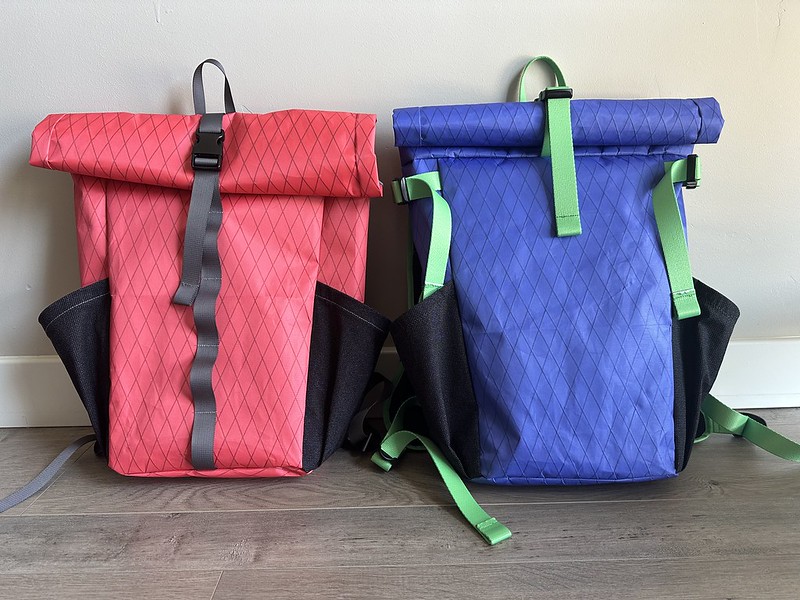
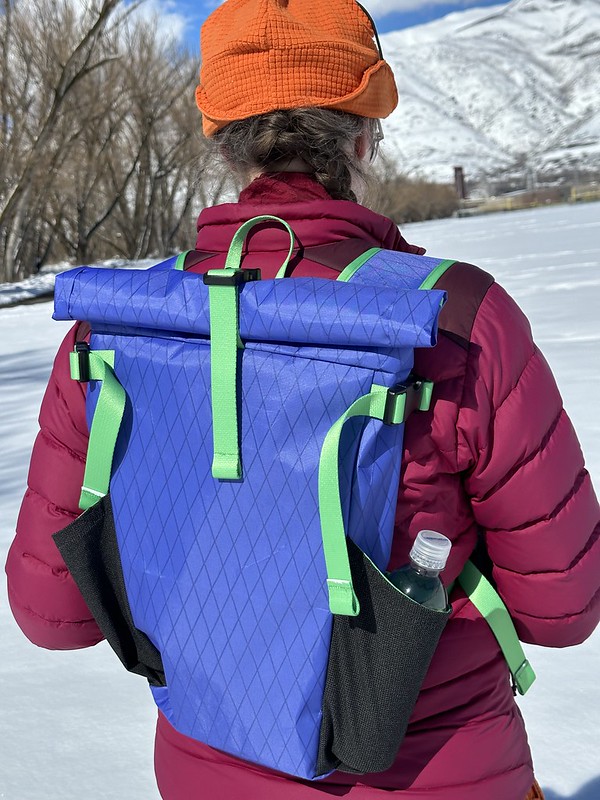
This was a massive project for me, but I was determined to complete it this year in time for the summer hiking season. The reason for making our daypacks was to get a better fit on our shoulders and reduce the pack’s weight overall. I was able to accomplish both. The packs are 63-77% lighter than our old packs and have been tailored to fit our shoulder widths and slope.
Weight
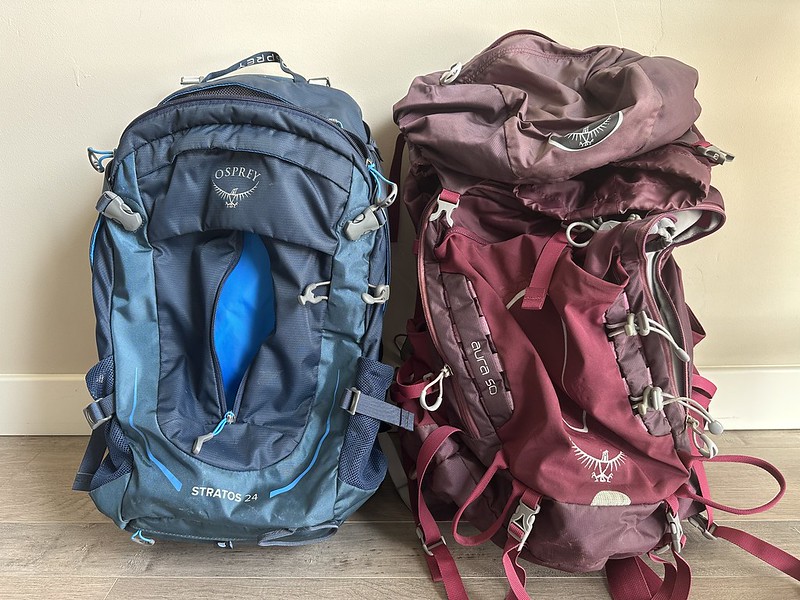
My old pack, the purple/red bag, is the Osprey Aura 50, and it weighs a whopping 4.29 lbs. Last year I tried to downsize my 50L pack to 24L because I didn’t need that much room. I had the 50L pack for the hip belt and adjustable frame. Osprey has started including adjustable frames and padded hip belts in their smaller packs. So I tried the Osprey Stratos 24 pack. The Stratos weighs 2.67 lbs. I wanted the hip belt and adjustable frame to keep the weight off my shoulders because I quickly get headaches from the shoulder strain.
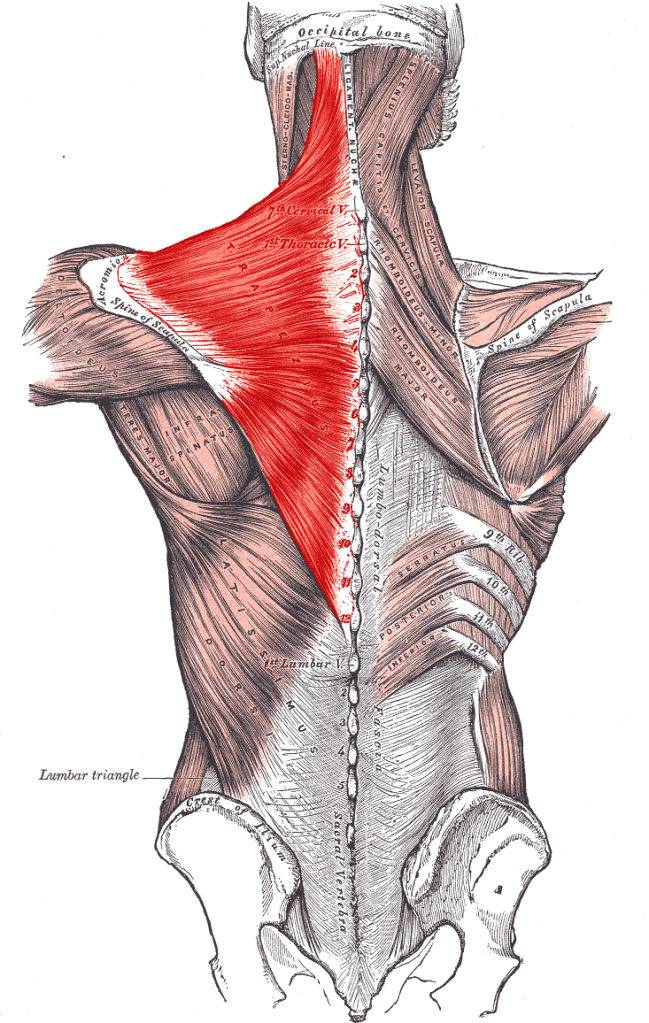
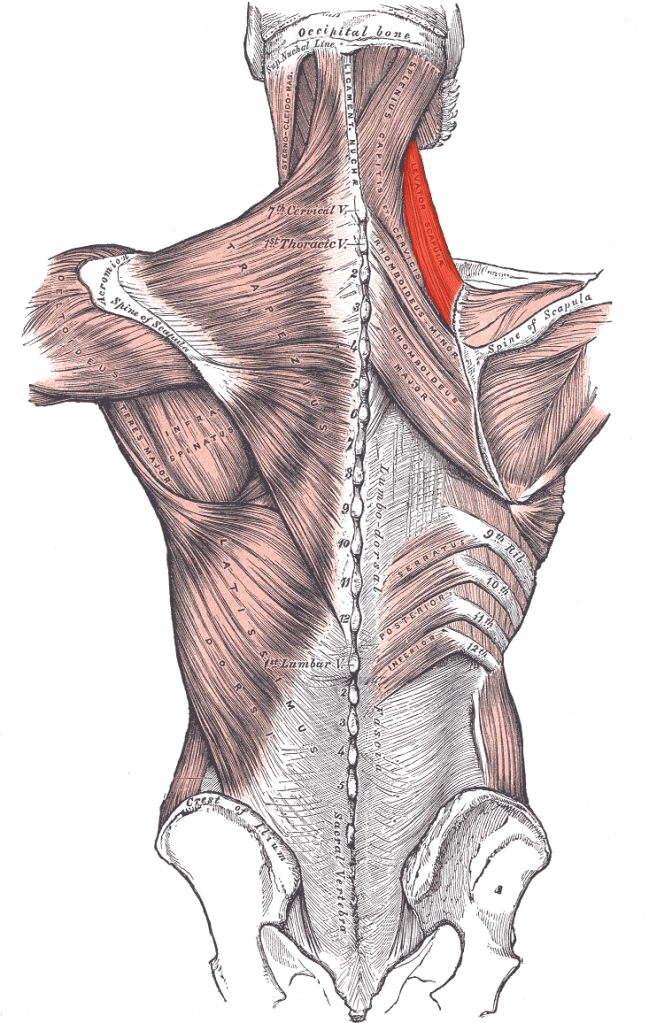
However, I struggled with the Osprey Stratos 24 because the straps were too narrow and dug into my upper trapezius and levator scapulae muscles. I had to give up on the Stratos 24 and wore a hip bag while researching how to make daypacks. I thought that if I could reduce the pack’s weight and get the shoulder width and slope correct, I could wear a bag without suffering headaches. Ultimately, my pack only weighs 1 lb, 63% less than the Stratos 24 and 77% less than the Aura 50!
Shoulder Width and Slope
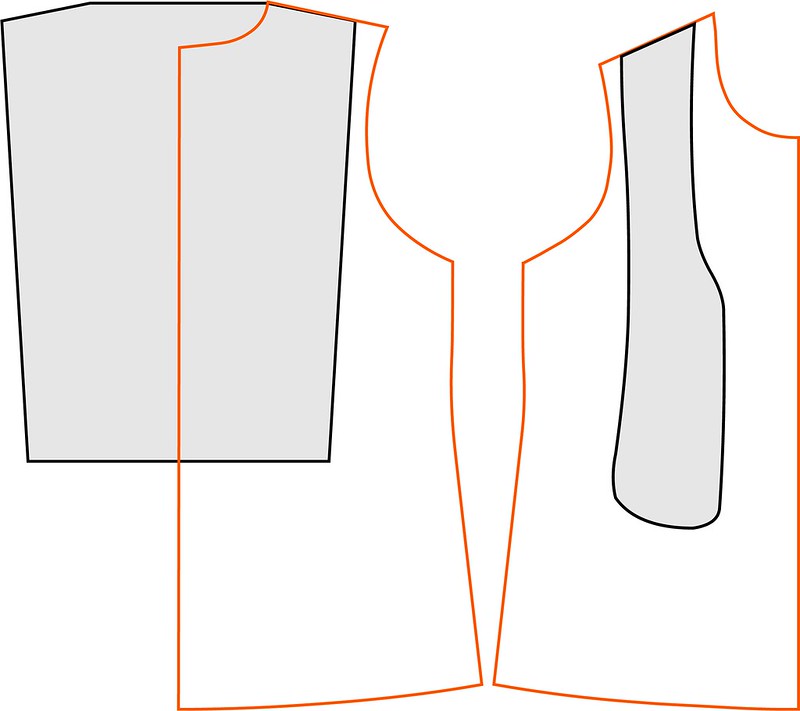
Notice where the slope of the back piece starts compared to the back of my tried-and-true t-shirt pattern? I ensured the backpack shoulder straps didn’t start too close to my neck. I wanted the outside of the strap to hit right at the AC joint, the bony protrusion at the top of the outer shoulder. The straps also are angled precisely to my shoulder angle. The back piece angle matches my back shirt pattern, and the front shoulder strap matches my front shirt pattern. I’ve spent a lot of time perfecting our t-shirt pattern over the years, so I know the shoulder slope is spot on for Ryan and me. Luckily my mom and I have very similar upper body shapes, and she can wear the same tops. So I didn’t have to calculate her shoulder slope.
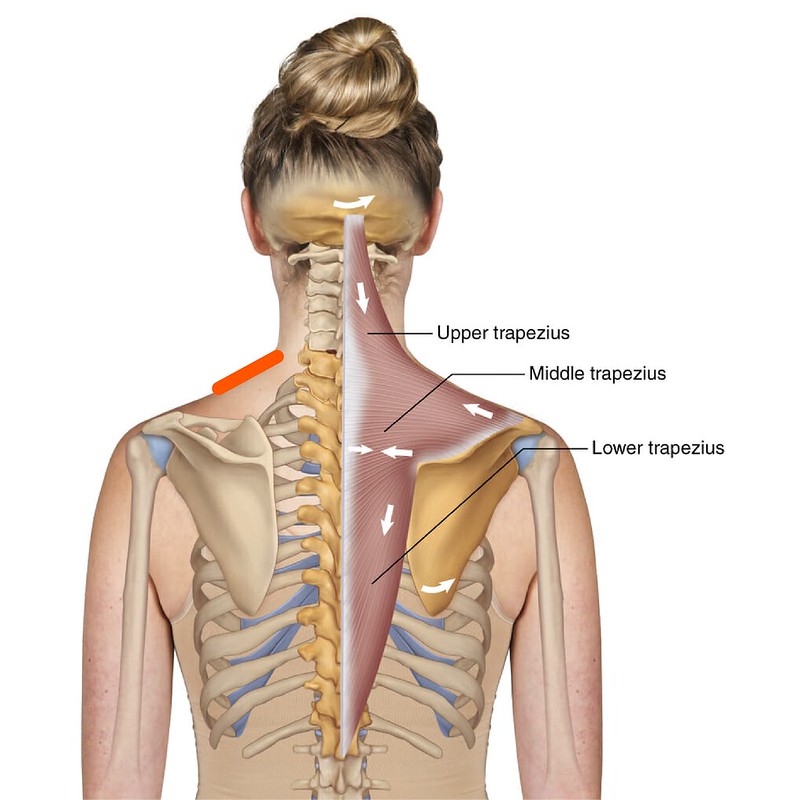
My old packs would sit approximately here on my shoulders, red line. Notice how close the straps are to my neck. After wearing my bag all day, I would have rub burns on the side of my neck.
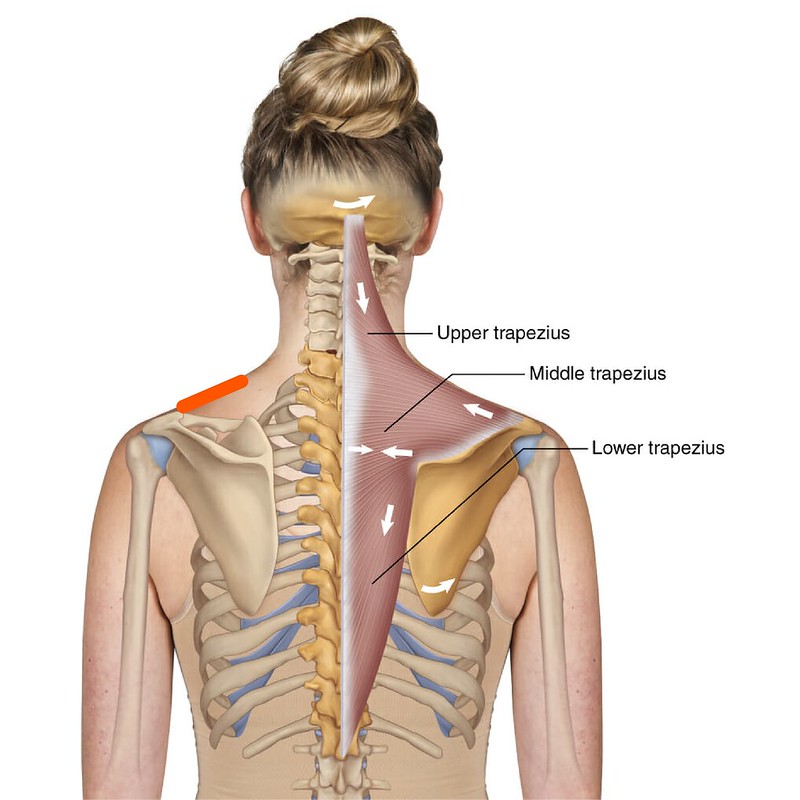
For this project, I moved the straps out and made sure the straps ended right at the end of my shoulders. This moved the straps away from my neck and off the upper trapezius and levator scapulae muscles.
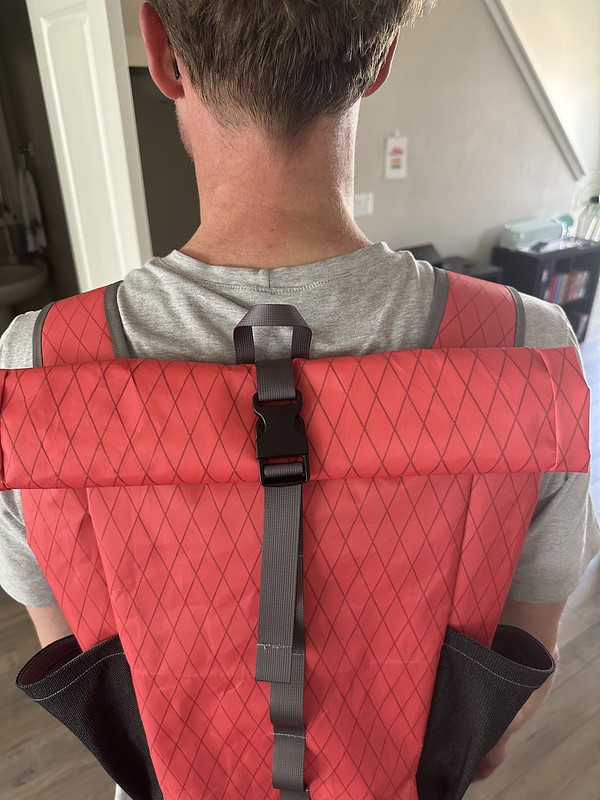
Patterns
Body
The body of our pack is based on the Zipworks 30L pack. The sizing was adjusted subtly for each person. The YouTube video shows how I finished the seams with grosgrain ribbon and how I constructed the pack in general.
Straps
Our straps are based on Learn MYOG Fastpack. The pack features a vest-like strap that I thought would work well for our daypacks. I had to adjust the angle of the straps between each of us, but that was the only change I made.

Subscribe to continue reading
Become a paid subscriber to get access to the rest of this post and other exclusive content.
