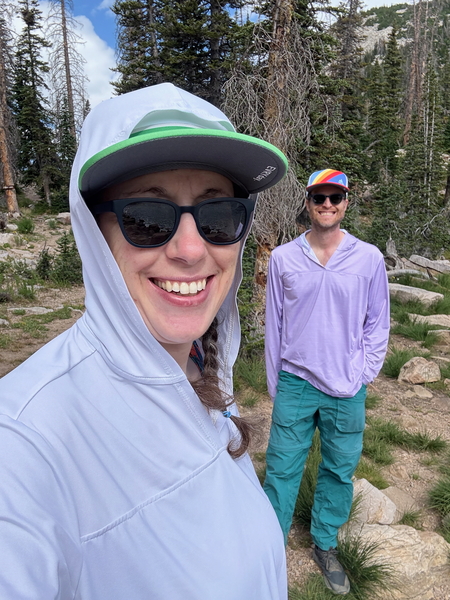
Now that I’m able to get back into hiking more regularly, I figured it was a good time to try out the sun protection shirt trend. Years ago, I used to wear long sleeves like the Patagonia Self-Guided button-down to avoid sun exposure, but I’d usually overheat in it. So I defaulted to basic t-shirts and lots of sunscreen. Obviously, fabric tech has come a long way since then, and with all the new UPF-rated knits out there, I thought it was worth giving this trend another shot.

Analyzing Style and Fit
The pattern has a boxy t-shirt fit with dropped shoulders, a shoulder yoke, side panels, gusseted sleeves with thumb holes, and a two-panel hood. It comes in 7 sizes, covering chest measurements from 30 to 52 inches. I used VStitcher to render the hoodie on both straight and curvy bodies in size 36 (for a 35–37 inch chest) and size 52 (49–52 inch chest). The fabric I used for the render is PolarTec® Delta (65% polyester, 32% Lyocell, 3% Spandex, 146 gsm) to give it a realistic look. To check the fit, I draped the hoodie with the hood both up and down. The hood doesn’t sit quite right on the straight figure avatars, so it’s definitely something to test before cutting into your pricey UPF knit.
Sizing
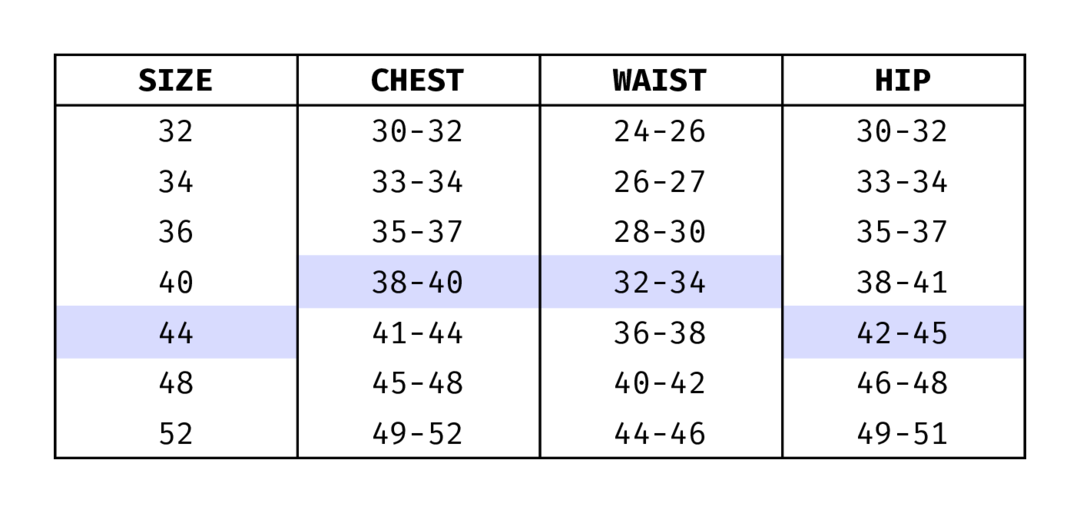
The pattern recommends choosing a size based on chest measurement, then grading the hips if needed. My current measurements: 39 inches at the chest, 34 inches at the waist, and 44 inches at the lower torso. I like my tees with at least five inches of ease at the chest.

To get that ease, the finished shirt needs to be at least 44 inches at the chest. Based on my measurements, I should be a size 40, but that only gives 42 inches, which is too snug. I went with size 44 instead, which finishes at 46 inches. That gives me the ease I want. In general, I think you should definitely size up with this pattern.
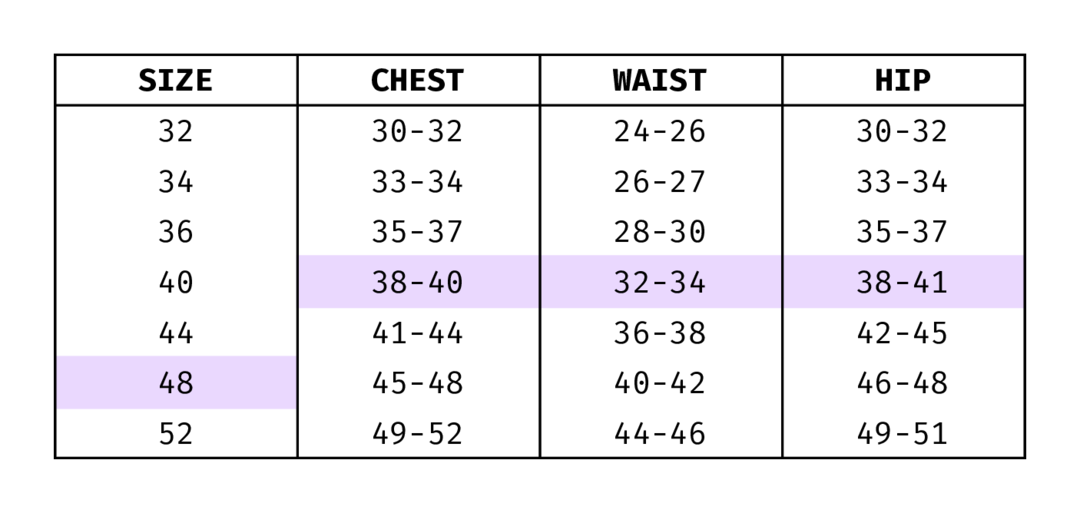
Ryan’s measurements: 39 inches at the chest, 34 inches at the waist, and 41 inches at the lower torso. He tried on my size 44 but found the shoulder was too tight, so I bumped him up to size 48 for more room.

Let’s start with the chest, since that’s how you’re supposed to choose your size. I’m guessing the base pattern is a size 34 or 36, because the grading starts to act a little strange around there. It’s unclear why size 34 has such a limited measurement range compared to others. Also, the difference between body and finished measurements shifts at size 36, which is odd.
In the chart, chest circumference is on the x-axis and pattern sizes (32 to 52) are on the y-axis. The bars show the recommended body measurements, and the “X” marks the finished garment size.

Hip measurements are inconsistent too. The hoodie is supposed to be the same size at the chest and hip, but it feels like the pattern was drafted with the chest in mind first and the hips were added later. The recommended body measurements vary by size, and the ease isn’t consistent either.
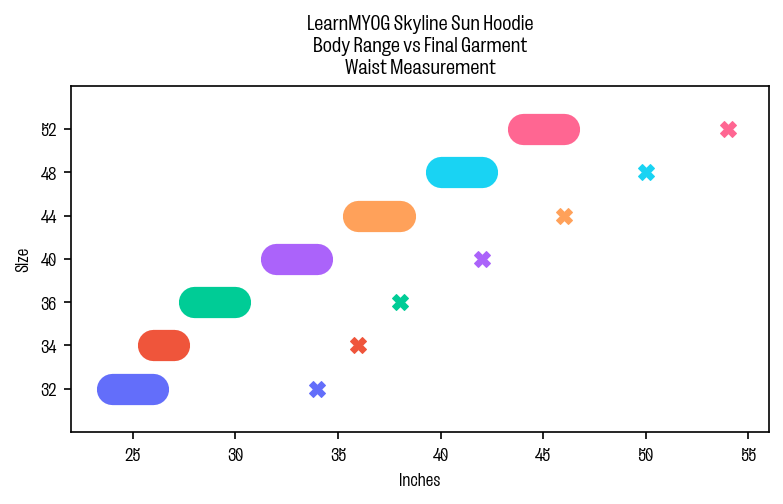
Same goes for the waist. The body measurement range feels pretty arbitrary, like it wasn’t given much thought during drafting.
Materials
I reached out to Discovery Fabrics to ask about their Graphene and Sunlite Jersey sun fabrics. Both are 160 gsm with a UPF 50 rating, which is great—but I wanted to know if there were any other differences.
They replied quickly but directed me to their Facebook group for details. I don’t use Facebook or other Meta platforms, so I can’t access that information. It’s frustrating when essential product details are only available through a third-party platform that requires a Meta account. I understand Facebook Groups are convenient for businesses—it’s familiar, has good reach, and costs nothing to host. But when key product information lives exclusively in comment threads on social media, it excludes potential customers who’ve chosen not to use those platforms.
In 2025, businesses should consider making product details accessible on their own websites rather than relying solely on social media platforms. Not everyone wants to join another platform just to learn about fabric specifications.
I ended up buying both fabrics to compare them myself, which worked out fine, but having that information readily available would have been helpful. It worked out, but I definitely spent more than I planned. Capitalism: 1, me: 0.
| Graphene | Sunlite |
|---|---|
| 160 gsm | 160 gsm |
| 65% side-to-side 55% lengthwise | 80% side-to-side 70% lengthwise |
| UPF 50 | UPF 50 |
| Moisture Wicking | Moisture Wicking |
| Antimicrobial | N/A |
| Thermoregulation | Cool to the Touch |
| $25 / yard | $20.50 / yard |
| 44% graphene, 44% polyester, 12% spandex | 90% polyester, 10% spandex |

Subscribe to continue reading
Become a paid subscriber to get access to the rest of this post and other exclusive content.
