
I can’t help but feel like I’m tempting fate by making these pants again almost exactly a year later! Last year, I was rushing to finish them before a trip to San Francisco, only to end up in the ER with pulmonary embolisms, canceling the trip entirely. Despite that rough start, the hiking pants turned out great for spring walks and hikes—until I quickly shrunk out of the size.
Analyzing Style and Fit
Sizing

I love the relaxed fit of these pants, so I decided to stick with the same pattern. My current measurements are a 39-inch chest, 34-inch waist, and 42.5-inch lower torso. Based on my largest measurement, I landed at a size 42, which is what I used. Last year, I made a size 46 for reference.

The sizing is relatively evenly distributed, but given the limited range, it’s unclear how things might scale beyond a 48-inch waist / 53-inch hips.
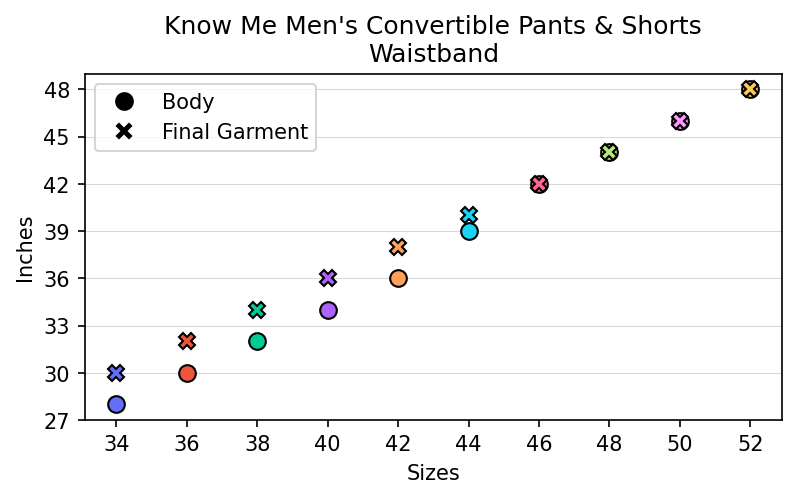
Comparing the final waistband to the recommended waist measurement, there are slight differences across sizes. The waistband is meant to sit one inch below the natural waist.
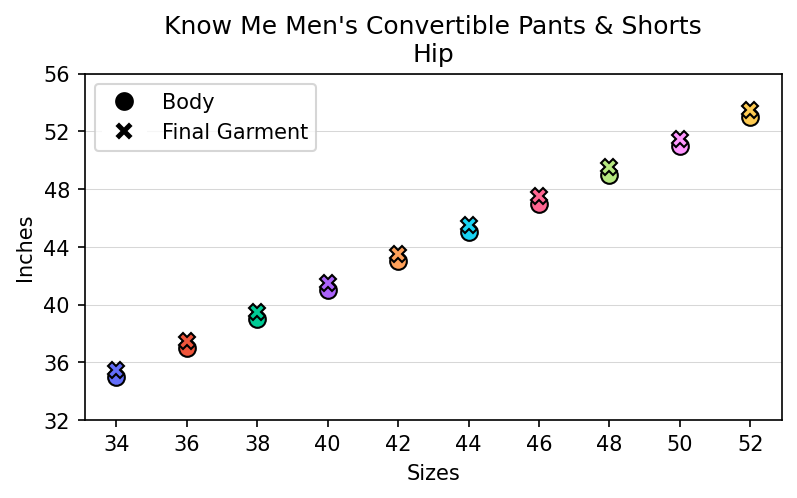
Thankfully, the pattern includes final garment measurements for the hip, which run about half an inch larger than the recommended size across the board.
Checking Balance
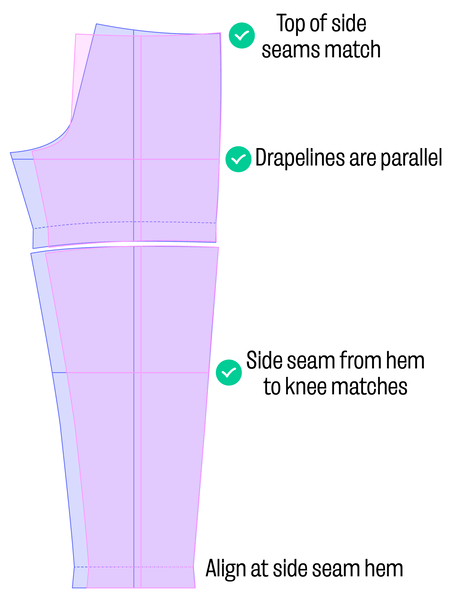
Since I didn’t do this last year, let’s go over balance. First, I line up the bottom of the outer hem and checked if the side seams matched from hem to knee—they did. The drape lines were also parallel, and the top of the side seams aligned.

For the inseam, I started at the bottom hem and worked my way up to the knee. As long as the shapes matched, I was good. The bottom of the crotch curves needed to be level, with the back curve allowed to sit up to 3/8-inch lower. The ME2041 pants are well-drafted—everything was spot on. Finally, I compared the inseam lengths, where the back inseam can be up to 1/2 inch shorter. Mine were nearly identical, meaning the pants were well-balanced!

Subscribe to continue reading
Become a paid subscriber to get access to the rest of this post and other exclusive content.
