I recently tried to fit the Topo Pants by Leila Makes, but I had to put the project on hold because I couldn’t get the pant legs to hang straight. Since then, I’ve been thinking about these pants a lot. The way they’re drafted is pretty unique. The front pattern piece has a normal curved side seam, with the grainline running parallel to the drapeline, as you’d expect. But the back pattern piece? It has a straight side seam, meaning the grainline is parallel to the side seam.
When the pants didn’t drape the way I wanted, my first thought was to redraft the front so the side seam would also be straight, matching the back. That idea took me down a rabbit hole of research on pant balance, which brings me to this blog series. Since the Topo Pants are so different, they’re a perfect example for diving deeper into the concept of balancing pant patterns.
Drawing Balance Lines and Drapelines
Here’s how I figure out drapelines on pants. It might not be exactly what everyone else does, but I’ve had to adapt my method for patterns with straight side seams (outseams).
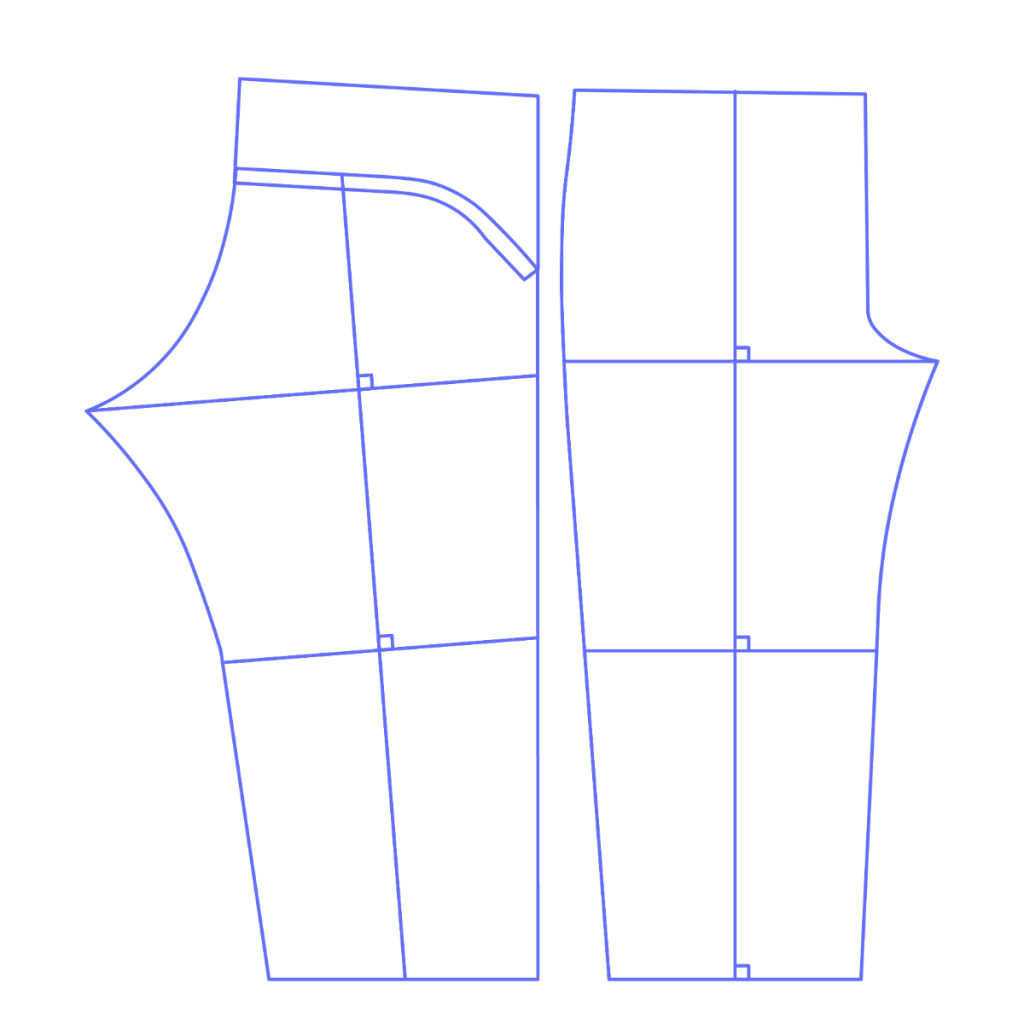
For pants with a curved side seam, you can find the vertical drapeline by locating the center of the hem and drawing a line straight up, perpendicular to the hem. That’s what I did for the front piece of the Topo Pants.
But if the side seam is straight (or if there’s no side seam at all), you need to find both the center of the hem and the center of the knee. Then, draw a line through those two points—that’s your drapeline, and it might not be perpendicular to the hem.
Next, I draw balance lines at the knee (kneeline) and at the bottom of the crotch curve (crotchline). These lines should always be perpendicular to the drapeline.

Subscribe to continue reading
Become a paid subscriber to get access to the rest of this post and other exclusive content.
