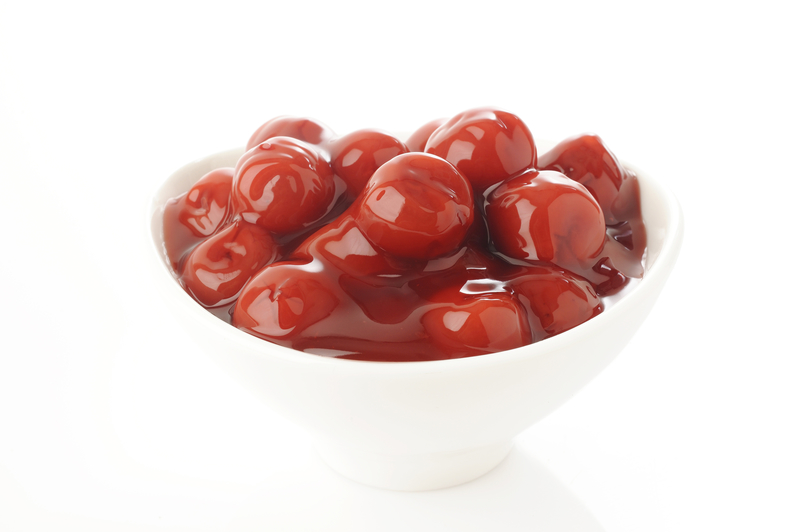
Couple weeks ago I was just giving myself more work than I could complete in a week. I decided to hunt down tart cherries so I could make my own cherry pie filling. I learned some great things about tart (or sometimes called pie) cherries. Utah is the second largest tart cherry producing state in the nation and fifth in the nation for sweet cherries. I found all this out, because I was trying to find someplace I could go pick or buy fresh tart cherries. However, most of the tart cherry farms in Utah are larger farmer’s geared towards large production. They don’t deal with single consumers per se. However, if you are willing and ambitious, you can buy huge buckets of tart cherries. However, these buckets come frozen and the cherries are usually already pitted. I was able to acquire a 30 pound bucket for $35 at McMullin Orchards down in Payson, UT. My bucket ended up yielding 10 quart jars worth of canned cherry pie filling. Besides using these cherries directly in a cherry pie, they can easily be used as topping for a cream cheese cake, used to make turnovers, danishes and other pastries, and so much more. Don’t let the size or quantity be overwhelming.
When it comes to canning foods, a key is to know the altitude at which you are living. At sea level, water boils at 212 degree Fahrenheit. As you go up in altitude, the temperature at which water boil decreases. I live at 4,792 feet. Therefore, my water boils somewhere between 202.9 and 202.4 degrees Fahrenheit. The boiling temperature is lower, because of the lower air pressure at higher altitudes. This last summer, I did several backpacking trips above 10,000 feet. All instructions on how to cook our food had to be completely ignored. Water boils at a much lower temperature at high altitudes and thus greatly influences cooking. This factoid is important, because the temperature difference between sea level and the mountains has a significant effect for water bath canning. You can’t increase temperature in a water bath, but you are able to add processing time. Luckily, researchers have found that you can safely water bath can up to 17,000 feet elevation. The USDA guidelines stop at 8,000 feet, but there are calculations if you live above 8,000 feet. I found a great book by Lisa Rayner, “The Natural Canning Resource Book” that talks about high altitude canning. You simply have to add more and more processing time as you go up in elevation. Before you start canning, you can check out your altitude at this website: http://www.whatismyelevation.com.

Subscribe to continue reading
Become a paid subscriber to get access to the rest of this post and other exclusive content.
